Air conditioning in St Albans
We install, service, repair and regas air conditioning for homes and businesses across St Albans, from the cathedral quarter to Jersey Farm, Park Street and How Wood. Here's what the conservation area, the city's Article 4 streets and the new Local Plan mean for where an outdoor unit can go.
single room, from £1,850
- single room, from
- £1,850
- city conservation area designated
- 1969
- conservation areas in the district
- 19
- listed buildings in the district
- 800+
Air conditioning installation in St Albans
We fit air conditioning in St Albans homes, flats and businesses: wall-mounted units for a single room, multi-split systems for several rooms on one outdoor unit, and ducted systems where nothing should show. A single room starts from £1,850 fitted, two rooms on one outdoor unit from £3,650.
Every install starts with a free survey. Our engineer checks where the units and pipes can go and gives you a fixed price in writing, and most single rooms are fitted in a day. We install Daikin, Mitsubishi Electric, LG and more. See how installation works or get a free quote.
Servicing, repairs and regas
We service and repair split, multi-split and ducted systems in St Albans homes and businesses, whoever fitted them. An annual service starts at £149, plus £120 for each extra indoor unit on the same visit, and keeps the manufacturer's warranty valid. We confirm the cost of a repair visit when you book.
A system that needs a regas has a leak, because refrigerant doesn't get used up. We find and fix the leak first, then regas and test the system, so you're not paying for gas that escapes again. We work on homes and business premises, not cars: car air conditioning is a job for a garage.
What air conditioning costs in St Albans
Our starting prices are the same here as across Hertfordshire and London. The survey turns them into a fixed written price, and planning or consent fees are separate.
- from£1,850
A bedroom or study
2.5 kW wall unit, 5 m pipe, fitted in a day
- from£2,050
A living room
3.5 kW wall unit
- from£3,650
Two rooms, one outdoor unit
Multi-split
- from£5,100
Three rooms
Multi-split
- from£250
Premium range upgrade
Quieter, more efficient unit
- from£1,795
Commercial wall unit
Fitted in business hours
- from£2,750
Ceiling cassette
In a suitable suspended ceiling
- from£149
An annual service
Keeps the manufacturer warranty valid
A Roman town, an abbey and a railway city
St Albans grew beside Verulamium, one of Roman Britain's foremost towns on Watling Street. The council's conservation area statement traces the city from the shrine to Alban, Britain's first Christian martyr, to an abbey that became one of the most powerful in the country after the Norman Conquest. The coaching trade on the London road followed, and St Albans became a city on 28 August 1877.
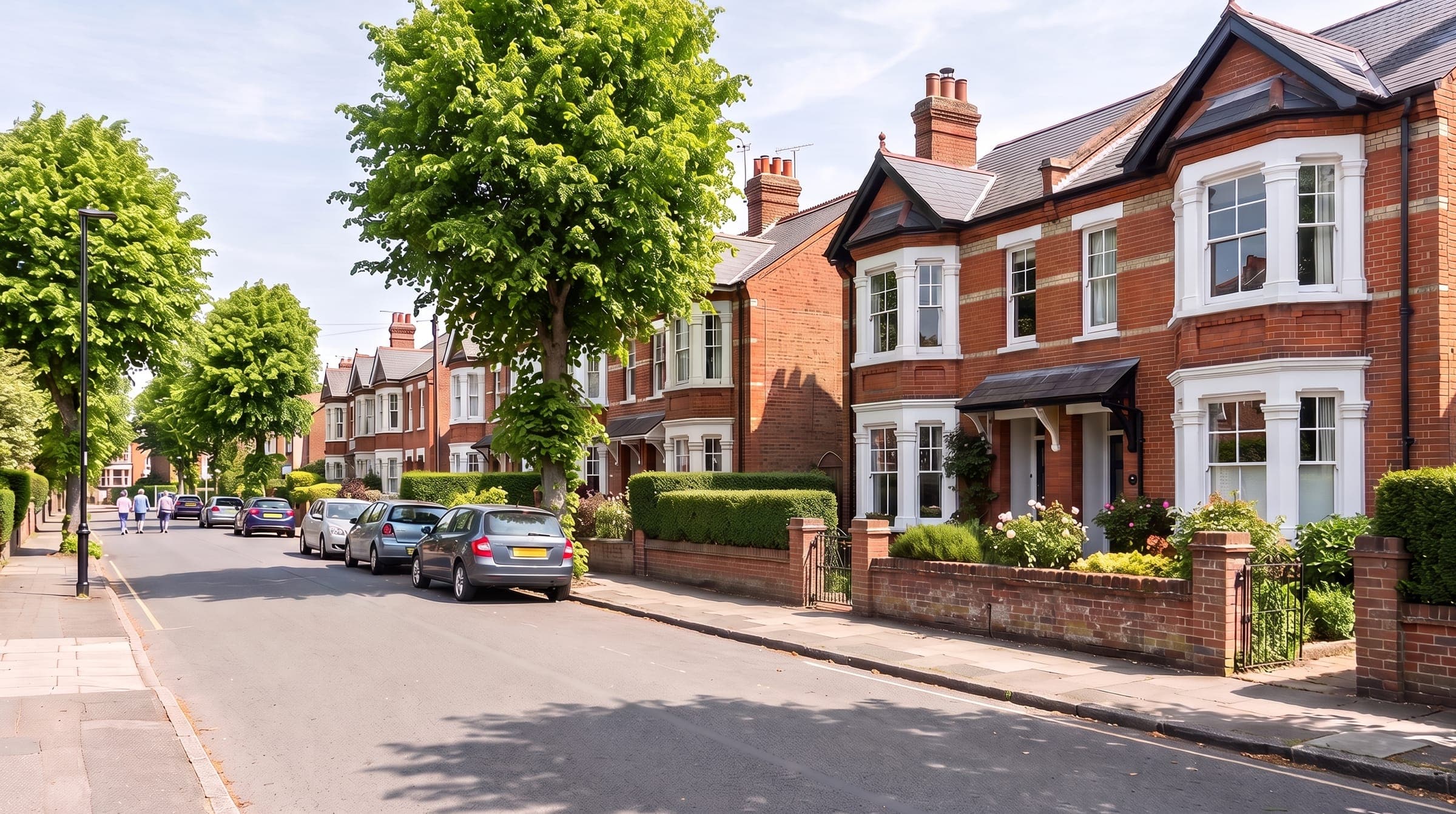
In the middle of the 19th century three railways arrived, bringing terraces and factories, and the city kept growing through the 20th century. So one street can hold medieval and Georgian houses, the next a row of Victorian terraces, and the edge of the city 1950s and later estates. Each needs a slightly different approach to air conditioning.
St Albans neighbourhoods and what they mean for an install
| Area | Homes and planning | What it means for the install |
|---|---|---|
| City centre and cathedral quarter | Medieval and Georgian buildings around the abbey, Romeland, George Street and Holywell Hill. Many are listed, and all are in the conservation area. | A listed building needs consent for any outdoor unit. We look for a hidden rear or roof position and give you the details for the application. |
| Fishpool Street and St Michael's | Fishpool Street, St Michael's Street, Branch Road and Blacksmith's Lane: dozens of listed houses, under the Verulam and Fishpool Street Article 4 direction. | Plan on listed building consent for many houses here. Rear positions only, with the pipework kept off the street side. |
| Verulam Road and Mount Pleasant | Streets of Georgian origin west of the centre. Mount Pleasant and parts of Verulam Road are in the same Article 4 direction. | Rear or side walls away from the road. We check whether your house is listed before we quote. |
| St Peter's | St Peter's Street, Marlborough Road, Townsend Avenue and the St Peter's Park streets, all at least partly in the conservation area. | A unit can't go on a wall facing the road without permission. Back walls and garden pads work well. |
| Clarence Park and the station | Victorian and Edwardian houses on Clarence Road, Granville Road, Stanhope Road, Victoria Street and Alma Road, inside the conservation area. | Outdoor unit at the rear. A front wall facing the road needs permission here. |
| Bernards Heath | Late Victorian and Edwardian red-brick terraces on Boundary Road, Culver Road, Heath Road and Walton Street, added to the conservation area in 1991. | Narrow fronts with little setback, so the unit goes at the back, with the pipes through the wall behind the indoor unit. |
| Sopwell Lane and Albert Street | Historic streets off Holywell Hill, inside the city conservation area and under their own Article 4 direction since 1990. | Rear positions, and a check on listing. Parts of Holywell Hill, Bardwell Road and Thorpe Road are in the direction too. |
| Sopwell and Cottonmill | Sopwell's own small conservation area takes in Sopwell House and New Barnes Mill. Parts of Cottonmill Lane are in the city one, by the nunnery ruins. | Outside those two areas the usual permitted development rules apply. We check your address first. |
| Cunningham Avenue | 42 houses built in the 1920s off London Road. A conservation area since 2014, with an Article 4 direction that covers air source heat pumps. | Planning permission is needed for any outdoor unit. We help you prepare the application. |
| Fleetville | Streets off Hatfield Road laid out before the First World War: narrow detached houses, semis and short terraces, with 1920s and 1930s houses between. | Outside the conservation area, so a heating-capable unit on a side or rear wall is usually permitted development. |
| Marshalswick | 1920s and 1930s houses on the old mansion grounds, then Marshalswick North from the 1950s, mostly semi-detached and detached family houses. | Usually permitted development. A multi-split serves two or three bedrooms from one outdoor unit. |
| Jersey Farm | A newer estate in Sandridge parish, built in stages: mostly family houses, with some flats and bungalows around St Brelades Place. | Side walls and ground pads suit most houses. We check any planning conditions on newer homes. |
| Park Street and How Wood | Park Street's old village centre has been a conservation area since 1994. How Wood grew in the second half of the 20th century. | Usually permitted development in How Wood. In Park Street's conservation area, units stay off walls facing the road. |
| Flats near the station and the centre | Newer blocks, many on former factory sites near the station, and flats above shops in the centre. | Freeholder consent first. One heat pump per block can be permitted development, with an outdoor unit up to 0.6 m³. |
Streets named here are from the council's conservation area character statement and its index of roads. Some roads are only partly inside, so we check your exact address.
Planning: St Albans City and District Council
Planning in St Albans is decided by St Albans City and District Council. A heating-capable outdoor unit on a house is often permitted development if it isn't used only for cooling, is no bigger than 1.5 m³ and passes the MCS 020(a) noise check of 37 dB(A) at neighbours' windows. A semi-detached or terraced house can have one heat pump, a detached house two. Our planning guide covers every rule.
You need permission for a listed building or a cooling-only unit. In a conservation area a unit can't go on a wall or roof facing a road, and elsewhere it can't go on a road-facing wall above the ground floor. If you want certainty, the council can issue a Lawful Development Certificate.
In July 2026 the government announced that Hertfordshire's county and district councils will be replaced by four unitary councils from 1 April 2028, subject to Parliament's approval. Until then, St Albans City and District Council decides applications.
The St Albans conservation area
The St Albans conservation area was one of the first in the country, designated in 1969 around the medieval core, the three parish churches and Roman Verulamium. It was extended in 1980, 1981, 1991 and 1996, and now takes in many Victorian and Edwardian streets too, from Bernards Heath in the north to the streets around Clarence Park and the station.
The council's character statement splits it into 27 character areas, from the abbey precincts to Gombards and the Spencer Park estate, each with its listed and locally listed buildings. Its index of roads lists every street that is wholly or partly inside. We check your address against it before we suggest a position, because a unit on a front wall here needs permission even where the house isn't listed.
Article 4 directions on St Albans homes
An Article 4 direction takes away some permitted development rights. These are the council's directions on homes in its conservation areas around the city.
| Direction | Where | Heat pumps |
|---|---|---|
| Verulam and Fishpool Street (1975, widened 1990) | Fishpool Street, St Michael's Street, Romeland, George Street, Spencer Street, Mount Pleasant and parts of Verulam Road | Not named, and made before the 2011 heat pump right. The 1990 direction removes rights for all external alterations, flues and alarm boxes included. |
| Sopwell Lane and Albert Street (1990) | Sopwell Lane, Albert Street, Pearces Walk, Malthouse Court and parts of Holywell Hill, Bardwell Road and Thorpe Road | Not named. The same list of works as Verulam and Fishpool Street. |
| Cunningham Avenue (2014) | The whole of Cunningham Avenue, off London Road | Removed. The direction names air source heat pumps, so any outdoor unit needs planning permission. |
| Childwickbury (1979 and 1993) | Childwick Green and parts of the Childwickbury estate, north of the city | Not named. It covers house extensions and alterations and the estate's boundaries. |
The council's other Article 4 directions cover farmland and business areas such as Alban Park and Porters Wood, where business premises can't become homes without permission. The council's planning constraints map shows whether one covers your address.
The new St Albans Local Plan
The council adopted its new Local Plan on 9 September 2026, replacing the District Local Plan Review of 1994. Planning applications are now decided against it, together with the neighbourhood plans for Harpenden, Sandridge, St Stephen, Redbourn and Wheathampstead.
Policy CE2 supports heat pumps in principle as low carbon energy. Policy HE1 asks for a heritage statement with any proposal that affects a listed building or a conservation area, so an application in the centre needs one. Policy HW1 asks new sources of noise near homes to show how they avoid or reduce it, which matters most for shop and office plant. We give you the unit's noise data and siting details for both.
Policy DES6(d) is the one aimed at outdoor units. It says plant must be part of the overall design, kept away from conspicuous positions, and that proposals will be refused where plant would harm the look of the building or the area around it. So a design pack for St Albans starts with the position nobody sees.
Shops, cafes and restaurants on St Peter's Street and the Market Place
The council runs the Charter Market every Wednesday and Saturday, licensed for an area of the city centre around St Peter's Street and the Market Place. The council's visitor guide also points to two open-air malls, Christopher Place and The Maltings, and the independent shops and old inns of the Cathedral Quarter. The historic core has many listed buildings and the council's noise policy applies to plant near homes, so we start with the siting and the paperwork.
See shop air conditioning, cafe air conditioning and restaurant air conditioning. We also fit offices along Hatfield Road and on the business estates the council protects, such as Alban Park, Brick Knoll Park, Porters Wood and North Orbital Commercial Park, in business hours, and keep F-Gas records for systems that need them.
Parking on install day
The council runs a growing number of controlled parking zones, with virtual permits. It allows up to 20 minutes of continuous loading in resident bays and on yellow lines without a loading ban, which is enough to unload the outdoor unit but not to park for the day.
Where there's nowhere to park near the house, the council can suspend a bay. It needs at least 10 days' notice and charges £30 a day plus a £25 admin fee. We agree parking with you when we book the install, with time to apply if a suspension is needed.
Villages and towns around St Albans
We cover the whole district and the places around it. Each has its own planning details, explained on its own page:
- London Colney (AL2): its own conservation area, in St Albans district
- Chiswell Green and Bricket Wood (AL2): in St Stephen parish, which has a neighbourhood plan; Old Bricket Wood is a conservation area
- Park Street and How Wood (AL2): the Park Street and Frogmore conservation area, and stations on the Abbey Line to Watford
- Redbourn (AL3), Wheathampstead and Sandridge (AL4): each has a conservation area and a neighbourhood plan
- Harpenden (AL5): the district's second town, with its own conservation area and neighbourhood plan
- Hatfield (AL10): over the boundary in Welwyn Hatfield, so planning goes to a different council
Areas and postcodes we cover
We cover every part of St Albans, including:
- AL1: the city centre, St Peter's, Clarence Park, Bernards Heath, Fleetville, Sopwell and the south of Marshalswick
- AL2: Park Street, How Wood, Chiswell Green, Bricket Wood and London Colney
- AL3: St Michael's, Verulam, Batchwood and Redbourn
- AL4: Marshalswick, Jersey Farm, Sandridge, Wheathampstead and Colney Heath
St Albans district in official figures
- households (2021 Census)
- 58,990
- live in a flat
- 23 in 100
- live in a house
- 76 in 100
- listed building entries
- 835
Of 58,990 households in the 2021 Census, 76 in 100 lived in a house (26 detached, 30 semi-detached, 20 terraced) and 23 in 100 in a flat. Most installs here are on houses, where a back or side wall is usually the simplest place for the outdoor unit.
In a conservation area an outdoor unit can't go on a wall or roof facing a road without planning permission, and an Article 4 direction can remove permitted development rights altogether. Check your postcode to see whether either applies to your street.
Figures for the whole St Albans district council area. Sources: ONS Census 2021, table TS044 (accommodation type); Historic England's National Heritage List entries within the council boundary, through planning.data.gov.uk (one entry can cover several buildings). Checked October 2026.
Air conditioning for shops, cafes and restaurants in St Albans
- shops and other retail premises
- 670
- licensed restaurants
- 110
- cafes and unlicensed restaurants
- 65
- pubs and bars
- 90
The St Albans district area has about 670 shops and other retail premises, 175 restaurants and cafes and 90 pubs and bars. Pubs and bars are a bigger share of food and drink here than in most of the areas we cover. A bar fills fast on a warm evening, so it is sized for a full room, and a beer cellar is a separate, colder job.
Permitted development for heat pumps covers homes, not shops, cafes or restaurants, so check with the council and your landlord before an outdoor unit goes up, and take extra care with a shopfront in a conservation area. Check your postcode.
- Shop air conditioning
- Cafe and coffee shop air conditioning
- Restaurant air conditioning
- Pub and bar air conditioning
- Salon and barber air conditioning
Business premises (local units) in the whole St Albans district area, rounded by the ONS. Source: ONS UK Business Counts 2026, through Nomis.
St Albans questions
Do I need planning permission for air conditioning in St Albans?
Often not. A unit that also heats can be permitted development on a house if it meets the size, position and noise limits. You need permission for a listed building, a cooling-only unit, a unit on a road-facing wall in a conservation area, and any outdoor unit on Cunningham Avenue, where an Article 4 direction covers heat pumps. Applications go to St Albans City and District Council.
I live on Fishpool Street. Can I still have air conditioning?
Often yes, with the right consents. Many Fishpool Street houses are listed, so you'll need listed building consent for an outdoor unit and the pipe holes. The street is in the conservation area and the Verulam and Fishpool Street Article 4 direction, so a unit on the front is out. A rear position has the best chance, and we give you the siting details and noise data for the application.
How much does air conditioning installation cost in St Albans?
A bedroom or study starts from £1,850, with a 5 m pipe run, and a living room from £2,050. Two rooms on one outdoor unit start from £3,650 and three rooms from £5,100. Businesses start from £1,795 for a wall unit and £2,750 for a ceiling cassette. The survey gives you a fixed written price.
Can you regas my air con in St Albans?
Yes, once we've found and fixed the leak, because a system that's short of refrigerant has one. We confirm the cost of the repair visit when you book, and price the repair and regas in writing before any work starts. We work on air conditioning in homes and business premises, not in cars.
Do you service and repair air conditioning in St Albans?
Yes, for most brands, whoever fitted them. An annual service starts at £149, plus £120 for each extra indoor unit on the same visit, and keeps the manufacturer's warranty valid. Visits are booked at least a week ahead, and we confirm the cost of a repair visit when you book.
Can I have air conditioning in my flat in St Albans?
Usually, once the freeholder agrees, so we start there. Permitted development allows one heat pump per block of flats, with an outdoor unit up to 0.6 m³. In blocks near the station or above shops in the centre, a balcony, flat roof or rear wall is the usual spot. If the building is in the conservation area, the unit can't face the road without permission.
Do you install air conditioning in St Albans offices and shops?
Yes, in business hours. Commercial wall units start from £1,795 and ceiling cassettes from £2,750. In the historic centre we start with the siting, because the historic core has many listed buildings and the council's noise policy applies to plant near homes. We keep F-Gas records for systems that need them and offer maintenance contracts.
Which air conditioning suits a Victorian terrace near the station?
A multi-split is the usual answer: one outdoor unit at the back serving two or three rooms, from £3,650 for two rooms. Clarence Road, Granville Road, Stanhope Road and the streets around them are in the conservation area, so the outdoor unit stays off the front wall. We size each room at the survey.