Hotel air conditioning for rooms, lobbies and bars
Guests judge a room in the first minute, and a stuffy one at night means a poor review. We plan and fit air conditioning for hotels across London and the Home Counties: quiet bedrooms, cool public spaces and an install phased so you keep trading.
commercial wall unit, from £1,795
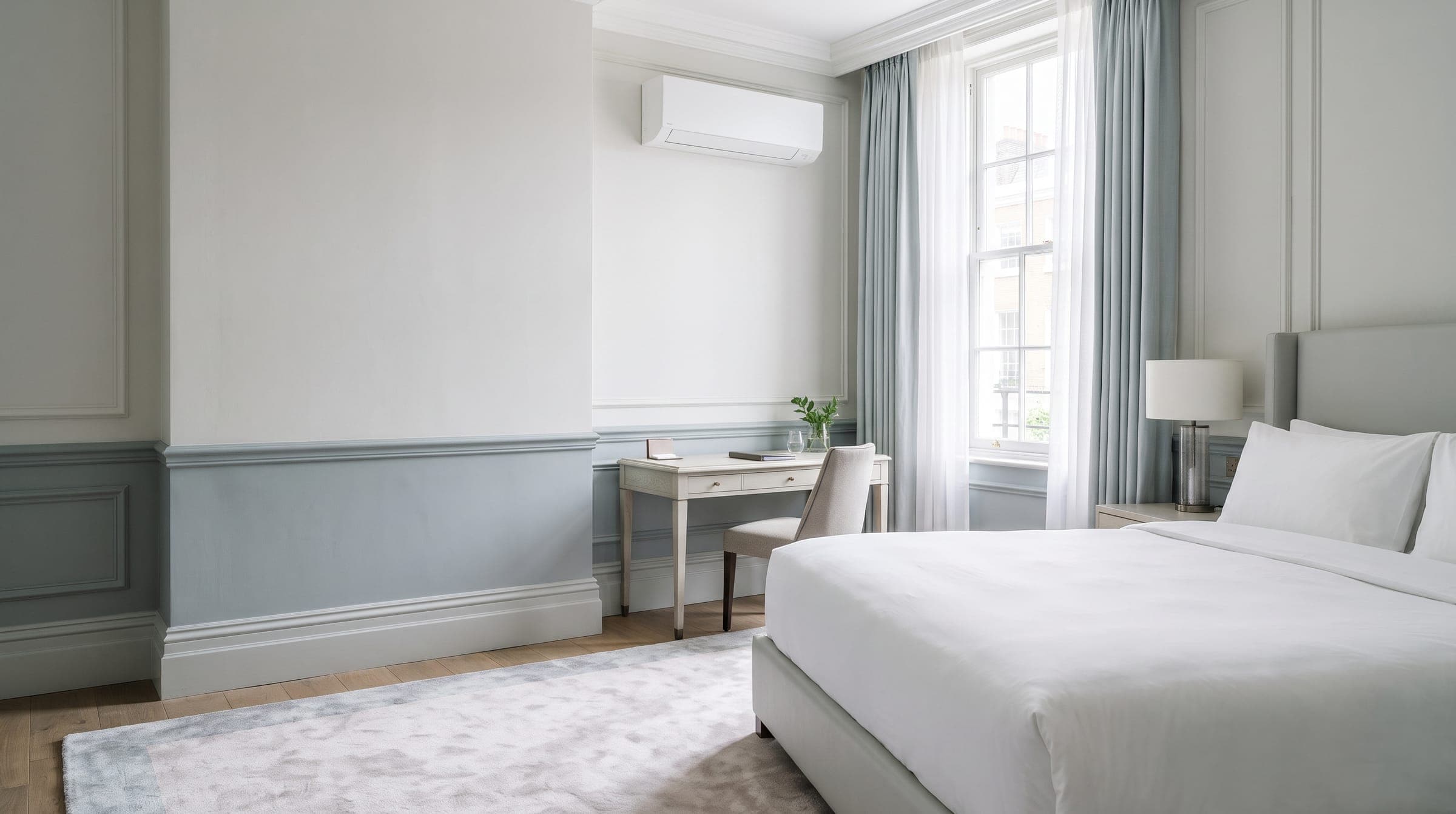
- commercial wall unit, from
- £1,795
- ceiling cassette, from
- £2,750
- TM44 inspection needed
- Over 12 kW
- floor by floor installs
- Phased
Which air conditioning for hotels?
Most hotels mix systems: one for the bedrooms, another for the public areas.
| Space | Usual choice | Why |
|---|---|---|
| Guest bedrooms | Ducted units or quiet wall units on a VRF system | Ducted units hide in the corridor ceiling; each room gets its own controller |
| Lobby and reception | Ceiling cassettes | Even air across a big room, and walls stay clear |
| Restaurant and bar | Cassettes or ducted | Sized for a full room on a warm evening |
| Conference and function rooms | Cassettes or ducted, on their own zone | Load jumps from empty to full in minutes |
| Small hotel or guest house | Separate wall-mounted splits | Cheaper to fit, and one fault only affects one room |
Hotel room air conditioning: quiet and simple
In a bedroom, noise matters more than anything. We pick indoor units by their sound data on the lowest fan speed, keep them away from the bed head, and route condensate pumps where guests won't hear them.
Controls should be obvious to a tired guest. A simple wall controller with temperature and fan speed works best. Your team can set limits centrally on most VRF systems, so a room isn't left on full cooling all day.
VRF or individual splits?
A VRF (variable refrigerant flow) system runs many indoor units from a few outdoor units, which saves roof space on a large hotel. Heat recovery versions can heat some rooms and cool others at the same time, moving surplus heat to where it's needed. Mitsubishi Electric lists hotels as a typical use for its R2 heat recovery range.
VRF holds a lot of refrigerant in one circuit. The safety standard EN 378 limits how much could leak into a single small room, so hotel bedrooms are designed with care, sometimes with leak detection. Separate splits avoid that question and suit smaller hotels, but need more outdoor units.
Hotel air conditioning installation while you stay open
Most hotels can't close for an install, so we work in phases: a floor or a wing at a time, with the rooms we need taken off sale and the rest trading. A Crowne Plaza refurbishment by another installer was split into five phases this way.
- Noisy work such as core drilling agreed for daytime hours
- Public areas done out of hours where you need it, quoted separately
- Corridors protected and cleaned before rooms go back on sale
- Each phase commissioned and handed over before the next starts
Outdoor units, neighbours and night-time noise
Hotel plant often runs through the night, when background noise is lowest. Councils usually judge plant noise against that background level using BS 4142. In Camden, for example, plant is commonly expected to sit 10 dB below the existing background, measured 1 metre from the nearest affected window, with a separate night-time limit from 23:00 to 07:00.
The permitted development rights for heat pumps cover houses and blocks of flats, not hotels, so expect a planning application with a noise report, plus your freeholder's consent. Listed buildings need listed building consent too.
Hotel air conditioning cost
Starting prices for single rooms and public spaces. VRF and whole-floor schemes are quoted after a survey.
- from£1,795
Commercial wall unit
Fitted in business hours
- from£2,750
Ceiling cassette
In a suitable suspended ceiling
- from£4,950
Ducted, per zone
Hidden in the ceiling, survey needed
Hotel air conditioning servicing and maintenance
A hotel system runs long hours, so plan on at least one service a year and filter cleaning more often in busy rooms. A maintenance contract lets us schedule visits around occupancy, a few rooms at a time.
- F-Gas leak checks at least every 12 months from 5 tonnes CO2 equivalent, every 6 months from 50 tonnes
- Fitting automatic leak detection doubles the time allowed between checks
- A TM44 inspection at least every 5 years when your systems add up to more than 12 kW
- The fixed penalty for having no TM44 report is currently £300
Hotel air conditioning questions
How much does hotel air conditioning cost?
A commercial wall unit starts from £1,795, a ceiling cassette from £2,750 and a ducted zone from £4,950. A VRF system for a whole hotel is priced after a survey, because it depends on room count, pipe routes and plant space.
Can you install air conditioning without closing the hotel?
Yes. We work floor by floor or wing by wing, so only the rooms we're working in come off sale. We agree the phases and working hours with you before we start.
Is VRF better than split systems for a hotel?
For larger hotels, usually. VRF serves many rooms from a few outdoor units and heat recovery models can heat and cool different rooms at once. For a small hotel or guest house, separate splits are simpler and cheaper.
Will hotel air conditioning keep guests awake?
Not if it's chosen well. We select indoor units on their quietest fan speed, keep them off the bed wall and site outdoor units away from guest and neighbour windows.
Does a hotel need a TM44 inspection?
Yes, if the air conditioning systems under your control add up to more than 12 kW of cooling, which most hotels do. An accredited energy assessor inspects at least every 5 years and lodges the report.
Sources
6
- GOV.UK: A guide to air conditioning inspections in buildings
- GOV.UK: Checking F gas equipment for leaks
- Mitsubishi Electric: City Multi YXM R2 heat recovery series
- Mitsubishi Electric: hotel VRF design and EN 378 refrigerant limits (Crowne Plaza)
- Noise survey lodged with Camden Council stating its plant noise criterion (2020)
- legislation.gov.uk: permitted development for air source heat pumps (Class G)