Care home air conditioning for cool rooms and bedrooms
Older residents can find it hard to cool down once rooms pass 26°C, and many can't move away from a hot room on their own. We fit care home air conditioning across London and the Home Counties, phased around residents, with quiet units and controls staff can manage.
commercial wall unit, from £1,795
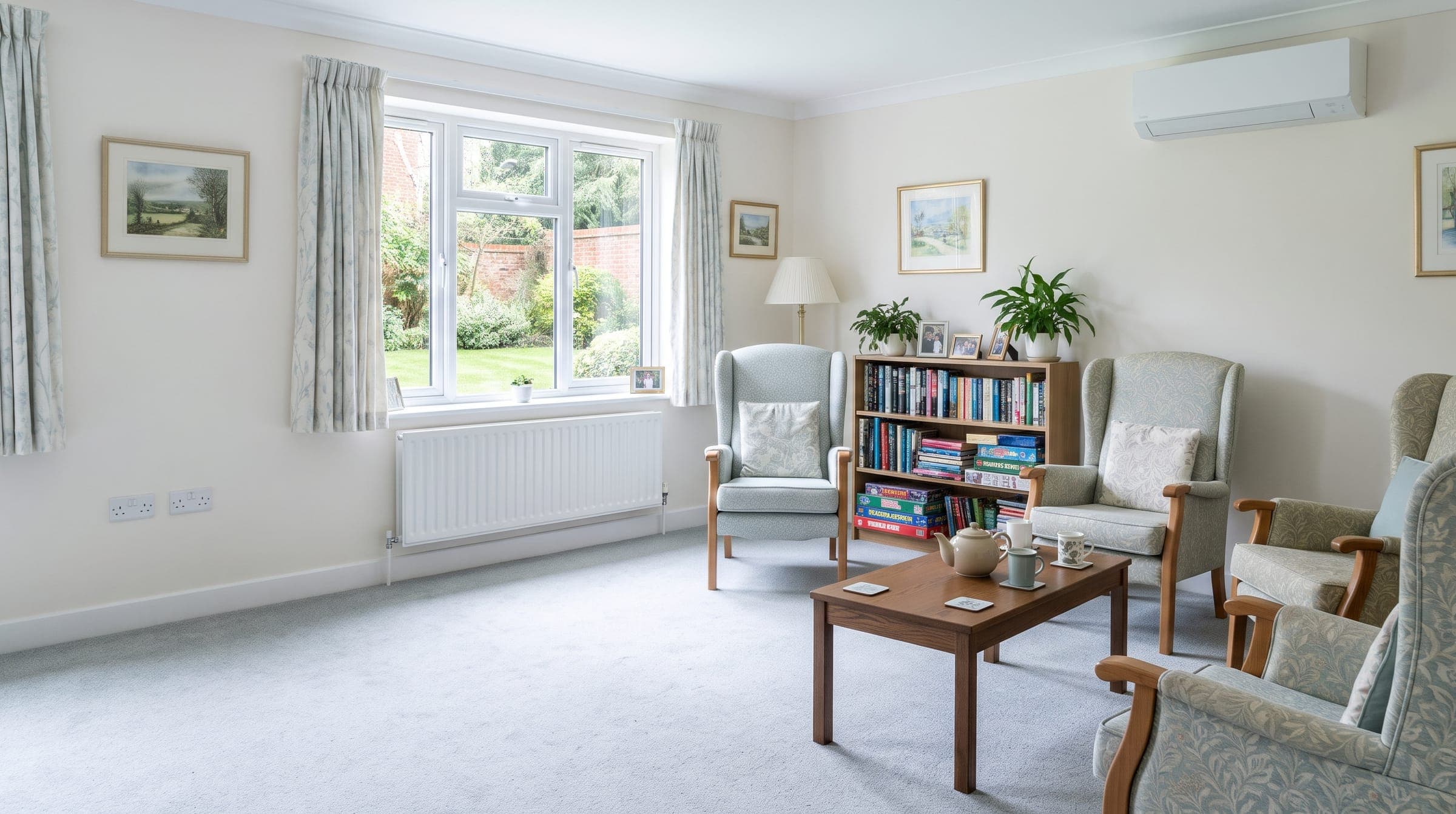
- commercial wall unit, from
- £1,795
- ceiling cassette, from
- £2,750
- UKHSA cool room guidance
- Below 26°C
- and REFCOM certified
- F-Gas
What the UKHSA heat guidance asks of care homes
UKHSA's guidance for social care managers says people at high risk can find it hard to cool themselves once temperatures rise above 26°C. Its Heat-Health Alert action card for providers turns that into actions, and air conditioning is one of the tools it names.
- Have a cool room or area that can be kept below 26°C, where people can go to cool down. It lists shading, ventilation, plants and, if necessary, air conditioning
- Put thermometers where vulnerable people spend a lot of time, such as bedrooms, living rooms and dining areas
- Check and record indoor temperatures regularly during the hottest periods, for all areas where residents live
- Make sure any fans or air conditioning units are clean, working, serviced and portable appliance tested, with a cleaning and servicing protocol in your plans
- Have staff familiar with the guidance and your hot weather plans before 1 June each year
Care home air conditioning installation: where to start
| Space | Typical approach | Why |
|---|---|---|
| Lounge or dining room as the cool room | Ceiling cassette or wall units | One reliably cool shared space meets the core UKHSA advice for the most residents |
| Hottest bedrooms | Quiet wall units, room by room | For residents who can't be moved, or for whom a move would be too disorienting |
| Treatment or medicines room | A unit sized for the room | UKHSA asks you to check fridges storing medicines work at the right temperature |
| Office and comms cupboard | Wall unit or dedicated unit | Staff areas and IT that runs day and night |
Safe controls and quiet bedrooms
Residents' rooms need controls that staff manage. At the survey we'll look at controllers that limit the temperature range or lock the settings, or a wall controller out of reach, so a resident can't set a room too cold by mistake. Ask us about central control if you want staff to see every room from one place.
In bedrooms, noise matters at night. We choose quiet indoor units and set fan speeds low, and place them so air doesn't blow directly onto a bed or chair. UKHSA also warns against aiming fans directly at people.
Infection control and HTM 03-01
NHS guidance on ventilation, HTM 03-01, says recirculating units like splits and cassettes may increase the risk of healthcare-associated infections. For long stay care homes and hospices, it asks those responsible to risk assess how far the guidance applies to them. Decide which rooms suit air conditioning with your infection control lead, and keep the units easy to reach and clean.
If your home is registered with the CQC, the regulations require premises and equipment to be clean, suitable and properly maintained.
Phased installs that keep the home running
Survey
We walk the home with your manager, measure the hottest rooms and agree which come first.
Phase plan
We split the work into small phases, a few rooms at a time, timed around care routines and visiting.
Install
We keep dust contained, keep corridors and fire exits clear, and leave each room clean before the resident comes back.
Handover
We set the controls, show staff how to use them, and give you service records for your heat plan.
Care home air conditioning cost
Starting prices. Whole-home and multi-room systems are quoted after a free survey.
- from£1,795
Commercial wall unit
Fitted in business hours
- from£2,750
Ceiling cassette
In a suitable suspended ceiling
- from£149
An annual service
Keeps the manufacturer warranty valid
- from£120
Each extra indoor unit
Same visit
Care home air conditioning servicing and maintenance
Book the service in spring, so the system is ready before summer and before your 1 June staff briefing. A system holding 5 tonnes CO2 equivalent of refrigerant or more needs a leak check at least every 12 months. If your units add up to more than 12 kW, you also need a TM44 inspection at least every five years.
Care home air conditioning questions
Do care homes have to have air conditioning?
No. UKHSA advises a cool room or area that can be kept below 26°C, and lists air conditioning as one option alongside shading, ventilation and plants. See the UKHSA guidance.
What temperature should a care home be in summer?
UKHSA doesn't set one temperature for every room. It advises keeping a designated cool area below 26°C, and checking and recording indoor temperatures regularly in all areas where residents live during the hottest periods.
How much does care home air conditioning cost?
A commercial wall unit starts from £1,795 and a ceiling cassette from £2,750. Whole-home systems are quoted after a free survey.
Can you install without moving residents out?
That's how we plan it. We work a few rooms at a time, agreed with your manager, so residents only leave their room while we're working in it.
Will air conditioning make bedrooms noisy?
Not if it's chosen with care. We pick quiet indoor units, run them on a low fan speed at night, place outdoor units away from bedroom windows and give you the sound data before you commit.
Sources for this page
7
- UKHSA: supporting vulnerable people before and during hot weather, social care managers
- UKHSA: Heat-Health Alert action card for health and social care providers
- NHS England: HTM 03-01 specialised ventilation for healthcare premises
- NHS England: HTM 03-01 Part A, design and validation (PDF)
- Health and Social Care Act 2008 (Regulated Activities) Regulations 2014, regulation 15
- GOV.UK: checking F gas equipment for leaks
- GOV.UK: a guide to air conditioning inspections in buildings