Estate schemes of management and air conditioning: what each estate asks for
Some homes need a second yes before an outdoor unit goes up: the estate's, on top of the council's. Hampstead Garden Suburb, Dulwich, Mayfair, Belgravia, Chelsea, Wentworth and Moor Park all have one, and so do Edgbaston and Bournville further afield. Here is how each scheme works, what it says about air conditioning and heat pumps, what it charges and how long it takes.
HGS Trust fee for an AC unit £130
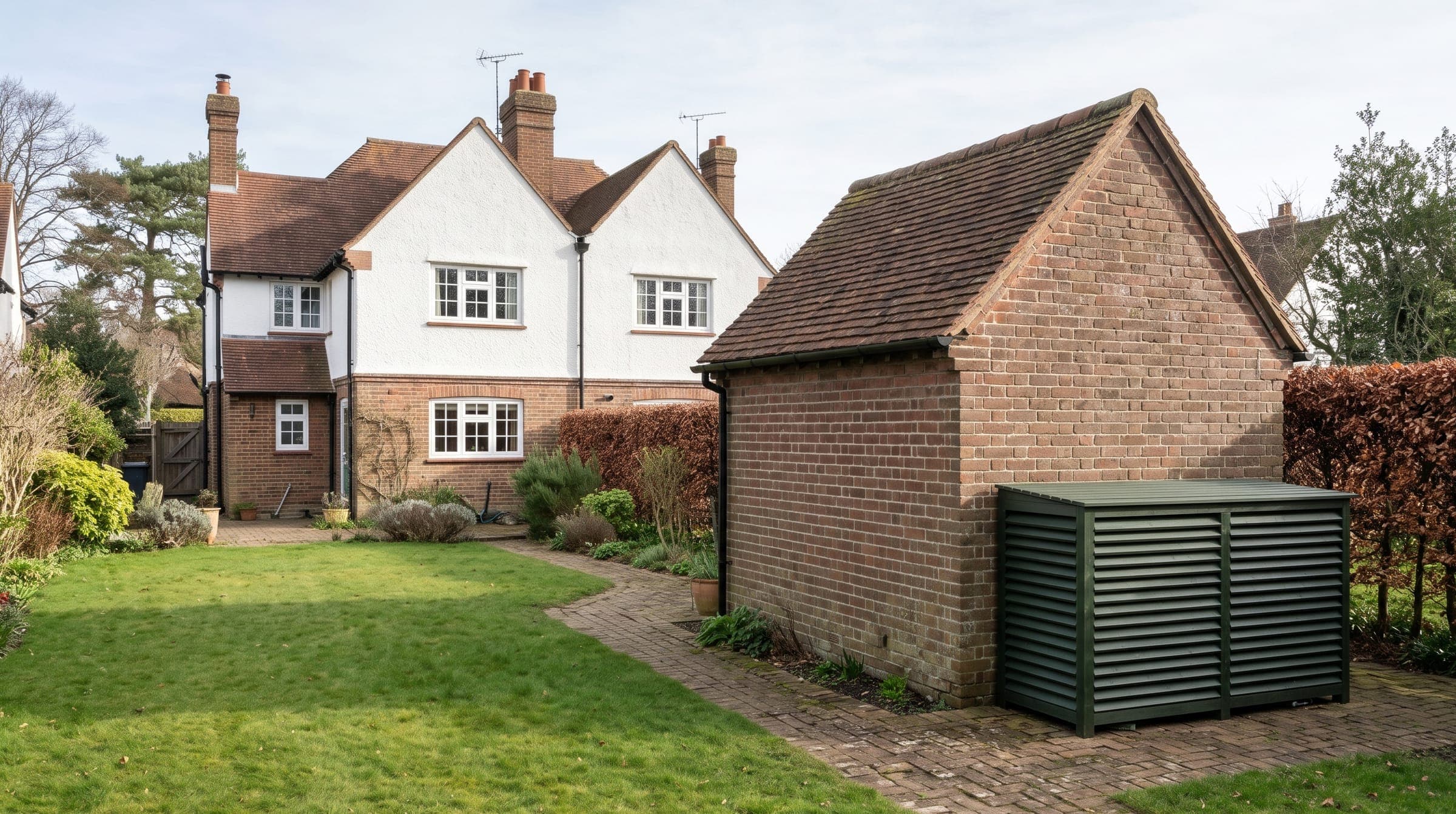
- HGS Trust fee for an AC unit
- £130
- Grosvenor fee for one AC unit
- £1,000
- the Act behind most schemes
- 1967
- a Dulwich Estate application
- 8 to 10 weeks
On this page15 sections
What an estate management scheme is
A scheme of management lets an estate keep control of how whole streets look after leaseholders buy their freeholds. It binds you whether or not anyone mentioned it when you bought.
- When the Leasehold Reform Act 1967 let leaseholders buy the freehold of their houses, the big estates feared losing control of how whole streets looked
- Section 19 of the Act let a landlord ask the High Court to approve a scheme to keep up the appearance and amenity of an estate
- A later route, section 70 of the Leasehold Reform, Housing and Urban Development Act 1993, does the same through a tribunal
- The Leasehold Advisory Service says these schemes are used for areas such as garden cities
- A scheme can regulate the redevelopment, use or appearance of property. It is registered as a local land charge
- Section 19(10) says it binds owners as if each of them had covenanted to follow it, so it passes with the house when you buy
- The Leasehold Advisory Service adds that scheme charges must be reasonable and can be challenged at a tribunal
- Not every estate here uses a scheme. Cadogan works through its leases, Wentworth through a private Act of Parliament and Moor Park through covenants
- The effect is the same: written consent before anything changes on the outside of the house, and an outdoor unit is a change on the outside
Why planning permission isn't enough
Estate consent is a private right sitting on top of planning law. Plan for two decisions, from two bodies, and fit nothing until you have both in writing.
- A system that heats and cools is an air-to-air heat pump in planning terms, and on many houses it needs no planning application at all under Class G, as our planning permission guide explains
- That does nothing for the estate. Wentworth says its consent is in addition to, and independent of, any approval required or not required by the council
- It works the other way too. Grosvenor's guide says an application can get listed building consent or planning permission from the council but not consent from Grosvenor, and you need both
- One pattern runs through every estate's guidance: heat pumps get a warmer welcome than air conditioning
- Dulwich says air conditioning is not a sustainable solution to cooling and other measures should be considered first
- Cadogan says it prefers electric heating and cooling and air source heat pumps
- So an application reads better when it presents the system for what it is: a heat pump that heats your home in winter and can also cool it in summer
Estate schemes compared: rules, fees and times
The estates and trusts with published rules, in and near our area, plus two in Birmingham for comparison. Read October 2026.
| Estate | How consent works | What it says on outdoor units | Fee | Time |
|---|---|---|---|---|
| Hampstead Garden Suburb Trust (NW11) | Scheme of Management, High Court 1974 | Not seen from the street or neighbouring gardens; timber enclosure normally expected | £130 for an AC unit, £98 for new external pipework (from April 2026) | Trust Council meets ten times a year, about 6 to 7 weeks after each deadline |
| Dulwich Estate (SE21, SE22, SE24) | 1967 Act scheme, just over 4,000 properties | Application needed if the unit is visible from beyond the boundary; detailed acoustic report expected | Minimum application fee £142 | About 8 to 10 weeks, including a 3-week consultation |
| Grosvenor (Mayfair and Belgravia) | Estate Management Schemes; Belgravia's is a 1973 High Court order | Consent needed for any air conditioning, comfort cooling or external plant | £1,000 for one AC unit; £500 licence fee on top for two or more (from 1 July 2025) | Not published |
| Cadogan (Chelsea and Knightsbridge) | Licence to Alter under your lease | Position of all external plant and an acoustic engineer's report; new external pipework not normally permitted | £1,000 admin charge plus solicitors, typically £1,800 to £2,000 | Aims for 90 days |
| Chalcots Estate (Camden) | Scheme Manager for the private section of the estate | Has refused any consent for rooftop plant | Not published | Not published |
| Wentworth Estate (Virginia Water) | Covenants enforced under the Wentworth Estate Act 1964 | No heat pump within 3.5 m of a boundary unless professionally soundproofed | £250 for minor external alterations; deposit and other fees may apply | Not published |
| Moor Park (Rickmansworth) | Covenants run by Moor Park (1958) Limited | Permission needed for any proposal to add air conditioning | £320 viewing fee for small works (from 11 May 2026) | Not published |
| Letchworth Garden City | 1967 Act Scheme of Management, Heritage Foundation | Rear or screened side, on the ground, 1 m from any boundary, one unit | Free if you apply before the work | Aims for 6 weeks |
| Welwyn Garden City | Estate Management Scheme run by the borough council | Not visible to the street or neighbouring gardens; front positions refused even with screening | Heat pumps in the free band; retrospective £281 | 8 weeks from a valid application |
| Calthorpe Estate (Edgbaston, Birmingham) | 1967 Act scheme of management | Energy devices not visible from the road or public space | £300 for a heat pump (from 1 April 2024) | Not published |
| Bournville Village Trust (Birmingham) | 1967 Act scheme of management | Condensers allowed if not visible from the street or neighbouring gardens; heat pumps 4 m from neighbours | £168 for a heat pump or air conditioning (from July 2023) | 5 weeks for minor, 10 for major |
Fees are as each estate publishes them, read October 2026. Some estates add further charges or deposits, so ask for the total before you apply. Planning and council fees are separate.
Hampstead Garden Suburb Trust
Freeholders in the Suburb are bound by a Scheme of Management approved by the High Court in 1974, and for most leaseholders the Trust is the ground landlord. All air conditioning plant needs the consent of Barnet Council and the Trust.
- The Design Guidance, written jointly with Barnet Council, says units must sit where they are not seen from the street or from neighbouring gardens
- They can be screened by planting or timber housings, and external pipe runs must be planned for minimal visual impact
- The Home Retrofit Guidance says an outdoor unit should normally be screened by a timber enclosure, and in sensible, screened locations these are likely to be acceptable, subject to a full application
- For heat pumps it warns that units can be surprisingly large and a louvred timber surround may be required
- Noise must not be a nuisance, and some units are only approved with noise attenuation
- The Trust wants a 1:1250 Ordnance Survey location plan and drawings at 1:50 or 1:100, with every alteration marked
- Show the position and material of all external pipework, existing and proposed
- Don't send payment with the form: the Trust works out the fee. Pre-application advice is free at planning@hgstrust.org
- A unit that is permitted development still needs Trust consent
- The Suburb's Article 4 direction of 2010 doesn't cover air source heat pumps, so Barnet's own planning answer depends on the usual Class G rules
The Dulwich Estate
Just over 4,000 properties in Dulwich are in the Estate's Scheme of Management, which grants licences for building work. Allow about 8 to 10 weeks: a permit first, then a licence after inspection.
- Guideline 16, Mechanical Plant Installations (May 2024), covers air and ground source heat pumps, air conditioning units and MVHR
- External plant should be sized and sited to minimise its impact on amenity, and an application is required if the unit is visible from beyond the property boundaries at ground level
- Dulwich is the estate most explicit about noise: a detailed acoustic report should be submitted with your application
- That report comes from an acoustician, and we supply them with the unit's sound data and position
- Trenches or ducts must not harm tree roots, and a tree root survey may be asked for
- Dulwich says outright that air conditioning is not a sustainable way to cool a building, so explain the heating role and the shading and ventilation you already have
- Drawings go in as one PDF, no larger than A3, at not less than 1:100, with a title block, new work outlined in red, the neighbours' building lines shown and site photos
- The minimum fee is £142, the Estate charges £43 to supply a location plan, and a final consent inspection costs £123
- Retrospective applications pay double
Grosvenor in Mayfair and Belgravia
Grosvenor's freehold owners are bound by the Belgravia and Mayfair Estate Management Schemes. Its guide to alterations lists air conditioning or comfort cooling, and any other external plant, as needing consent.
- That is separate from Westminster's planning decision and any listed building consent
- Stage one: send concept drawings to Grosvenor's Building Surveying team for an initial view
- Stage two: the formal submission goes through the Grosvenor Connect portal with drawings at not less than 1:50 and the fee
- From 1 July 2025 the fee for one AC unit with no other works is £1,000, and two or more units add a £500 licence fee
- Grosvenor may appoint acoustic consultants or a mechanical engineer to review the scheme, at your cost
- Its Specification gives the house style: ventilation extracts exit to the rear or through the roof, soil and waste pipes stay inside, and no wires are allowed on the front
- Design the pipe and cable route to match, which usually means running everything inside to a rear or roof position
Cadogan in Chelsea and Knightsbridge
Cadogan controls alterations through its leases rather than a freehold scheme: if your lease needs its consent, you apply for a Licence to Alter.
- Its guidelines (June 2023) say that where air conditioning or comfort cooling is proposed, the position of all external plant must be given
- The application must come with an acoustic engineer's report showing how the Royal Borough of Kensington and Chelsea's noise criteria will be met
- The council itself asks for an acoustic report with every air conditioning application
- New external pipework will not normally be permitted, and no new pipes may be fixed to exterior elevations
- So the refrigerant route has to run inside the house to the unit
- On the positive side, Cadogan says it prefers electric heating and cooling and air source heat pumps where unit size and space allow
- Costs are a £1,000 administrative charge plus solicitors' fees, which Cadogan puts at £1,800 to £2,000 for a routine licence
- It aims to deal with applications within 90 days
Chalcots, Wentworth and Moor Park
Three more London-area estates, each with its own route to consent.
- Chalcots, Camden: Chalcots Estate Limited, on Eton College's Chalcots Estate, describes itself as the Scheme Manager for the private section
- That covers Briary Close, Brocas Close, Elliott Square, Hawtrey Road, Huson Close, Hornby Close and the Quickswood, Conybeare and Primrose Hill Road houses
- In a 2024 objection to a Camden application it said it approves external alterations independently of the council and has refused any consent for rooftop plant
- It publishes no fee or timescale, so contact it before you design
- Wentworth, Virginia Water: the Wentworth Estate Roads Committee enforces the estate's covenants under the Wentworth Estate Act 1964
- All building works and alterations need its consent, in addition to and independent of Runnymede Borough Council
- Its Area A guidance says certain heat pump units can cause noise pollution, and it won't permit them within 3.5 m of the boundary unless professionally soundproofed
- Minor external alterations are listed at £250, and a damage deposit and development fee may also apply
- Moor Park, Rickmansworth: Moor Park (1958) Limited says permission is needed for any work that alters the outside of your house, including adding air conditioning
- Its fee list from 11 May 2026 gives air conditioning as an example of Small Works, with a £320 viewing fee; building levies are listed separately, so ask whether one applies
- Moor Park is also a conservation area, but its 2007 Article 4 direction predates heat pump rights and can't have removed them
Letchworth and Welwyn Garden City
The two Hertfordshire garden cities have the schemes nearest our base in Luton. Our garden city guide covers both in full.
- Letchworth: the Heritage Foundation runs a 1967 Act Scheme of Management with its own heat pump design principles
- Those are a rear or screened side position, on the ground, at least 1 m from any boundary, and ideally one unit per house
- Welwyn Garden City: Welwyn Hatfield Borough Council runs the Estate Management Scheme, whose design guide has a section on air conditioning
- It has refused front positions even with screening
Outside our area: Calthorpe and Bournville
Two Birmingham estates show the same pattern: keep the unit out of sight from the road and neighbours.
- Calthorpe, Edgbaston: all building works except non-structural internal changes need Calthorpe Estates' written consent under clause 17 of its scheme
- Its handbook says energy saving devices should be installed as unobtrusively as possible and not be visible from the road or public space
- In the conservation area, applications are assessed with Birmingham City Council
- The fee for environmentally friendly initiatives such as heat pumps is £300, from 1 April 2024
- Bournville Village Trust: external condensers for heat pumps and air conditioning are allowed if not visible from the street or neighbouring gardens and they don't affect neighbours
- They are screened by planting or timber housings. Heat pumps go beside rear or side walls, preferably on the ground, at least 4 m from neighbouring properties
- The fee for heat pumps, including air conditioning, is £168 from July 2023
- Minor applications take five weeks and major ones ten, and some newer streets need Crest Nicholson's approval instead
How to find out if your home is covered
Search the local land charges
Schemes under both the 1967 and 1993 Acts are local land charges. Gov.uk's local land charges search is free, or £15 for an official certificate, though not every council has moved to the national service yet. If yours hasn't, ask the council's land charges team.
Read your title register
An online copy of your title from HM Land Registry costs £7, and an official copy £11. Covenants and notices are almost always in the charges register. Look for the estate's name, a scheme of management or a covenant against external alterations.
Check the estate's map
Bournville publishes a scheme boundary map and Welwyn Hatfield has an online map of its scheme. Elsewhere, ask the estate, or look in your purchase pack, which may include the scheme's rules.
Ask the estate before you design
The Hampstead Garden Suburb Trust and Letchworth's Heritage Foundation give free pre-application advice, and Grosvenor wants concept drawings first. A short email with photos of the proposed position saves a refused application.
Then check planning separately
Look up listed status, conservation areas and Article 4 directions for the council's side. Our planning checker looks up your postcode in the government's planning data.
What estates look for in an air conditioning application
Pulled from the estates' own guidance. Every one of them judges an outdoor unit on where it is seen, how loud it is and what it adds to the outside of the house.
- The outdoor unit at the rear, low down, ideally on the ground, out of view from the street and from neighbouring gardens
- A timber or louvred enclosure, or planting, where the estate asks for one, with the maker's airflow clearances kept inside it
- Distance from boundaries where the estate sets one: 1 m in Letchworth, 3.5 m at Wentworth unless soundproofed, 4 m from neighbours at Bournville
- One outdoor unit serving several rooms rather than several units, with its exact dimensions on the drawings
- Pipes run inside the house, with any external pipework drawn in full, or none at all where the estate, like Cadogan, won't normally allow it
- Sound data for the unit and, where the estate asks, an acoustic report by an acoustician
- The system presented as a heat pump that heats and cools, with the shading and ventilation already in place
- Drawings to a stated scale, usually 1:50 or 1:100, with existing and proposed clearly marked and the neighbours' buildings shown
- No reliance on a neighbour's unit as precedent: Hampstead Garden Suburb and Bournville both say non-compliant work elsewhere is no justification
Where the design pack helps
Estates decide from drawings, not quotes. Our design pack is the technical side of the application.
- It includes a measured survey, a location plan and block plan, and scaled existing and proposed elevations and floor plans
- It shows the outdoor unit position, enclosure, pipe and condensate routes, the equipment schedule and the maker's sound data with our MCS 020 calculation
- Where an estate or council wants an acoustic report or a heritage statement, we tell you at the start and can introduce independent specialists
- The pack is from £795, and can be more for a larger house, more units or an estate and council that both want full drawings
- You get a fixed fee in writing first and pay it in full when you accept
- It's payable whether or not consent is granted, because the estate and the council decide, not us
- If you accept our installation quote within 6 months of receiving the pack, the full fee comes off the installation, and one round of changes is included
- The design pack terms have the rest
Estate scheme questions
What is an estate management scheme?
A legal scheme, approved by the High Court under the Leasehold Reform Act 1967 or by a tribunal under the 1993 Act, that lets an estate control how houses look after their owners bought the freehold. It is a local land charge and binds every owner as if they had signed a covenant. In practice it means you need the estate's written consent for external changes, including an outdoor unit.
Do I need Grosvenor's consent for air conditioning in Mayfair or Belgravia?
Yes, if your property is in the Belgravia or Mayfair Estate Management Scheme. Grosvenor's guide lists air conditioning, comfort cooling and any other external plant as needing consent, separately from Westminster's planning decision. You send concept drawings first, then a formal submission at not less than 1:50 through Grosvenor Connect. From 1 July 2025 the fee is £1,000 for one unit, with a £500 licence fee on top for two or more.
Does the Calthorpe Estate scheme of management cover heat pumps?
Yes. All building works on the estate, except non-structural internal alterations, need Calthorpe Estates' written consent, and heat pumps sit in its environmentally friendly initiatives fee band at £300 from 1 April 2024. Its handbook says energy saving devices should not be visible from the road or public space. In the conservation area, Birmingham City Council is involved in the assessment too.
Do I need Bournville Village Trust permission as well as planning permission?
Yes, if your home is in the Bournville Estate Scheme of Management. The Trust's consent is separate from Birmingham City Council's planning decision. Its design guide allows condensers for heat pumps and air conditioning if they can't be seen from the street or neighbouring gardens, and asks for heat pumps at least 4 m from neighbouring properties. The fee is £168 and minor applications take about five weeks.
My unit is permitted development. Do I still need the estate's consent?
Yes. Permitted development only answers the planning question. The estate's consent is a private right that applies whatever the council says, and several estates say so in their own words. Wentworth's consent is in addition to, and independent of, any approval required or not required by the council, and the Hampstead Garden Suburb Trust says all air conditioning plant needs its consent as well as Barnet's.
What happens if the estate refuses?
Each estate has its own route. Letchworth's Heritage Foundation has a review and then an appeal to an Independent Inspector within 12 weeks, costing £550 split equally. Welwyn Garden City's Estate Management Scheme lets you resubmit an amended scheme or ask for a review of the process within 3 months. Elsewhere, ask the estate why, and change the position, size or screening. A different position is often the answer.
Can I point to a neighbour's unit to get mine approved?
Rarely. The Hampstead Garden Suburb Trust and Bournville Village Trust both say non-compliant work elsewhere cannot be used as justification. Your neighbour's unit may predate the rules or never have had consent. Design yours to the current guidance instead.
How long does estate consent take?
From about five weeks at Bournville for a minor application to about 8 to 10 weeks at Dulwich and up to 90 days for a Cadogan licence. The Hampstead Garden Suburb Trust decides at Trust Council meetings ten times a year, about 6 to 7 weeks after each deadline. Letchworth aims for six weeks and Welwyn Garden City eight. Ask the estate before you book an install date.
Can you apply to the estate for me?
You apply as the owner, and where the estate accepts an agent we can submit it for you if you ask. Some estates only take applications from owners or tenants: Welwyn Garden City's scheme is one. Either way, the decision is the estate's. What we provide is the drawings, specification and sound data the estate needs to decide.