Air conditioning outdoor unit covers: should you cover it?
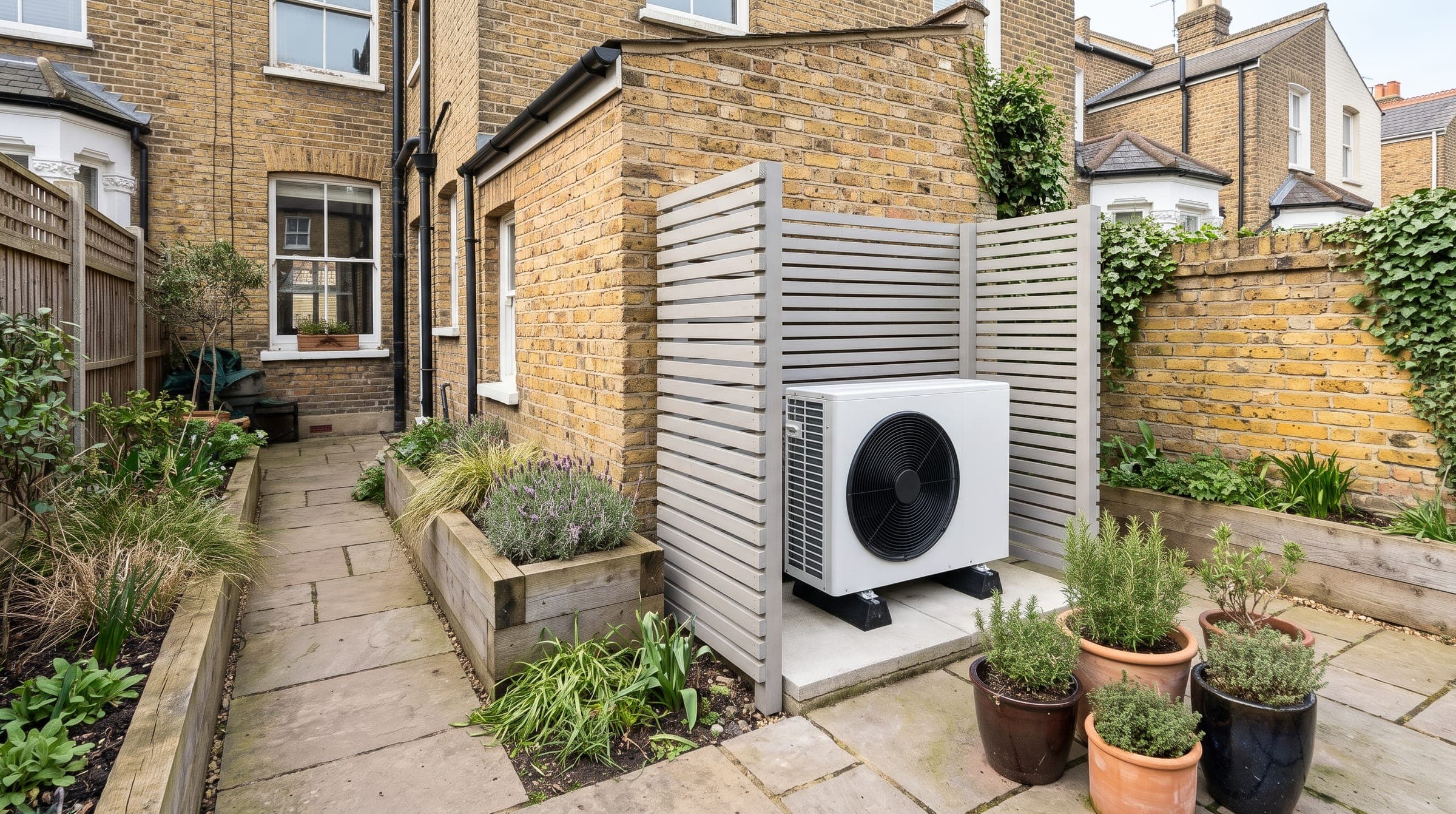
Don't cover a modern outdoor unit, especially in winter. A split air conditioner is a heat pump, so it works all year and needs air moving freely through it to heat your home. A snow canopy and a well-spaced, open screen are fine; a closed box or a winter cover is not.
- cover a unit that heats in winter
- Don't
- free space below, Daikin RXP manual
- 300 mm
- above the expected snow, Daikin
- 100 mm
- and front for any screen
- Open top
On this page7 sections
Covers and screens: what's safe
| Option | Safe? | Why |
|---|---|---|
| Winter cover over the whole unit | No | It blocks the air the unit needs to heat, and traps damp |
| Closed box or cupboard | No | Hot or cold air loops back in, so it works harder and may cut out |
| Snow canopy or hood above the unit | Yes | Makers suggest one where snow can fall on it |
| Pedestal or raised stand | Yes | Keeps it above snow and lets defrost water drain away |
| Slatted screen, open top and front, well clear | Yes, if spaced | Hides it while air flows; leave room to service |
| Planting nearby | Yes, if trimmed | Keep leaves and branches clear of the fins and fan |
| Cover while not in use for months | Only if it's switched off | Remove it before switching back on |
Based on the Daikin RXP and Mitsubishi Electric MSZ-LN installation manuals and Daikin's FAQ. Clearances differ by model, so we follow the manual for your unit.
Why winter covers are a hangover from old units
Old cooling-only air conditioners sat idle all winter, so people covered them. Today almost every split unit is a heat pump that heats your rooms in winter, pulling warmth from the outside air through its fins. Cover it and it can't breathe.
In heating, the outdoor unit also defrosts itself now and then. Daikin says the frost turns into water or steam, and a little water drips out during normal heating too, so it needs space below to drain, not a cover holding the damp in.
Hiding an outdoor unit safely
- Pick the spot first: a side return, a back wall or behind a bin store is easier than any screen
- Use slats with wide gaps, not solid panels
- Leave the top open and the fan side open or well clear
- Keep a good gap around the unit; Daikin's rule of thumb is about 1 m clear on each side
- Make the screen easy to move, so the unit can be serviced
- Don't face the fan straight at a wall close by: the warm or cold air loops back
- Keep the drain area clear and paved or gravelled
Snow, wind and winter
UK snow rarely buries a unit, but the makers still plan for it. Daikin's manual says protect the outdoor unit from direct snowfall, never let it be snowed up, fit a snow cover or shed and a pedestal if needed, and keep it at least 100 mm above the maximum expected snow. Mitsubishi Electric suggests a canopy, a pedestal or baffle boards in snowy spots.
Wind matters more here. Both makers say not to let wind blow straight into the unit's air inlet or outlet, and Mitsubishi Electric notes that wind during defrosting makes the defrost take longer. If heavy snow does build up, clear it gently from around the unit; Mitsubishi Electric's own advice for its heat pumps is to keep leaves and snow clear.
Screens and planning
Most homes in England can fit an outdoor unit under permitted development (Class G) if it meets the noise and siting rules. Class G limits the outdoor unit to 1.5 cubic metres on a house, and that limit includes any housing, so a box built round the unit counts towards it. A freestanding garden screen a little way off is a different matter, but in a conservation area or at a listed building ask the council first. See our planning permission guide.
Keep it clean instead
Instead of a cover, keep the fins and fan clear. Our annual service from £149 cleans the outdoor coil and checks the unit, with a written record for your warranty.
- from£149
An annual service
Keeps the manufacturer warranty valid
- from£120
Each extra indoor unit
Same visit
- from£149
Essential plan
Annual service, records, priority booking
- from£199
Plus plan
Essential, no diagnostic fee, 10% off repair labour
Outdoor unit cover questions
Should I cover my air conditioning unit in winter?
No, not if it's a heat pump, which almost every modern split unit is. It needs free airflow to heat your home in winter. A snow canopy above it is fine; a cover over it is not.
Can I build a box around my outdoor unit?
Not a closed one. A slatted screen with an open top and an open or well-spaced front can hide it, as long as there's room around the unit and the screen can be moved for servicing.
How much space does an outdoor unit need?
It depends on the model, so we follow the manual. As an example, Daikin's RXP manual asks for at least 300 mm free below the unit, and Daikin's Australian FAQ gives a rule of thumb of about 1 m clear on each side.
Why is water coming out of my outdoor unit in winter?
That's normal. In heating the unit defrosts itself, and Daikin says the frost turns into water or steam. It needs somewhere to drain. See our condensate drain guide.
Does snow damage an outdoor unit?
Light snow is fine. Makers say don't let it be snowed up: keep it raised above the expected snow, fit a canopy if snow falls straight onto it, and clear heavy drifts gently.
What's the best way to hide an outdoor unit?
Choose the spot well at the start: a side return, a back wall, or a low wall bracket behind planting. We plan that at the survey. Get a quote.
Sources
6
- Daikin: RXP-M outdoor unit installation manual (snow, clearances, drainage)
- Mitsubishi Electric UK: MSZ-LN installation manual (snow, wind, defrost)
- Daikin Australia: can I cover the outdoor unit?
- Daikin UK: the outdoor unit discharges water or steam
- Mitsubishi Electric UK: heat pump FAQs
- legislation.gov.uk: GPDO 2015, Schedule 2, Part 14, Class G (air source heat pumps)