The Real Cost of Heating One Room This Winter
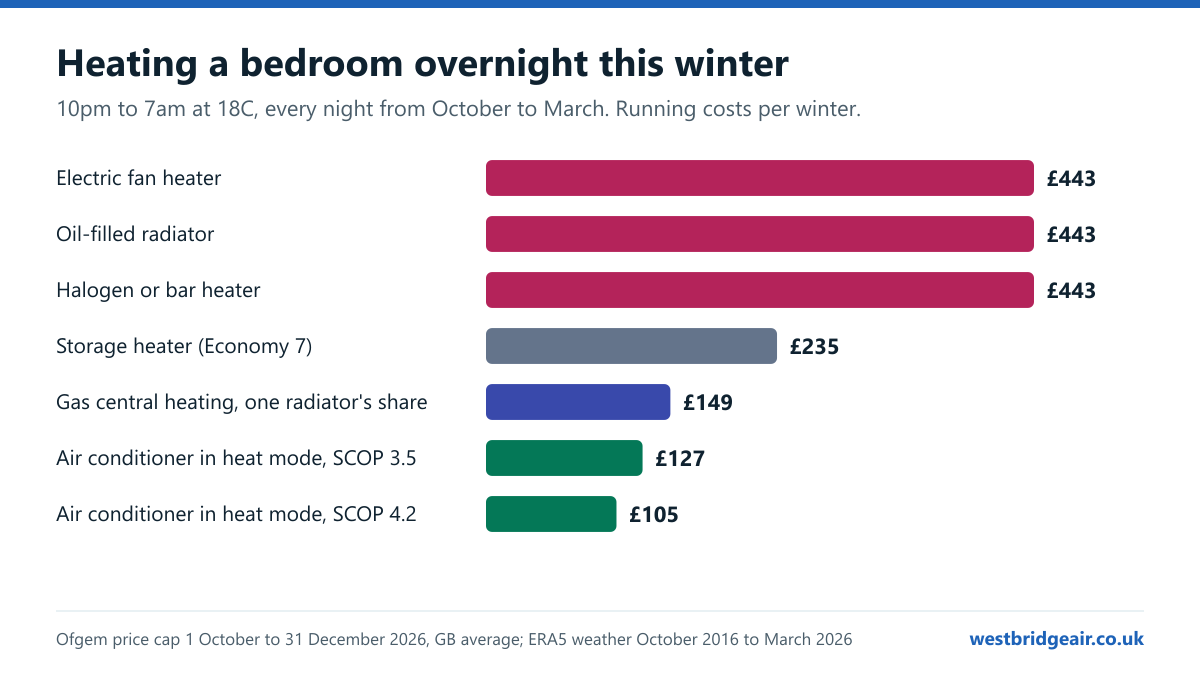
Heating a bedroom overnight with a plug-in electric heater will cost about £443 this winter at the Ofgem price cap, against £127 with a wall-mounted air conditioner in heat mode on our cautious figures: £316 more for the same warmth. Every plug-in heater, from a fan heater to an oil-filled radiator, costs the same for each unit of heat, and the air conditioner gives 3.5 times as much heat for the same electricity.
Ofgem price cap 1 October to 31 December 2026. Last updated 2026-11-04.
What we found
- A plug-in heater warming a bedroom from 10pm to 7am costs about £443 from October to March. An air conditioner in heat mode costs about £127 on a cautious SCOP of 3.5, and £105 at the certified rating of an entry-level unit.
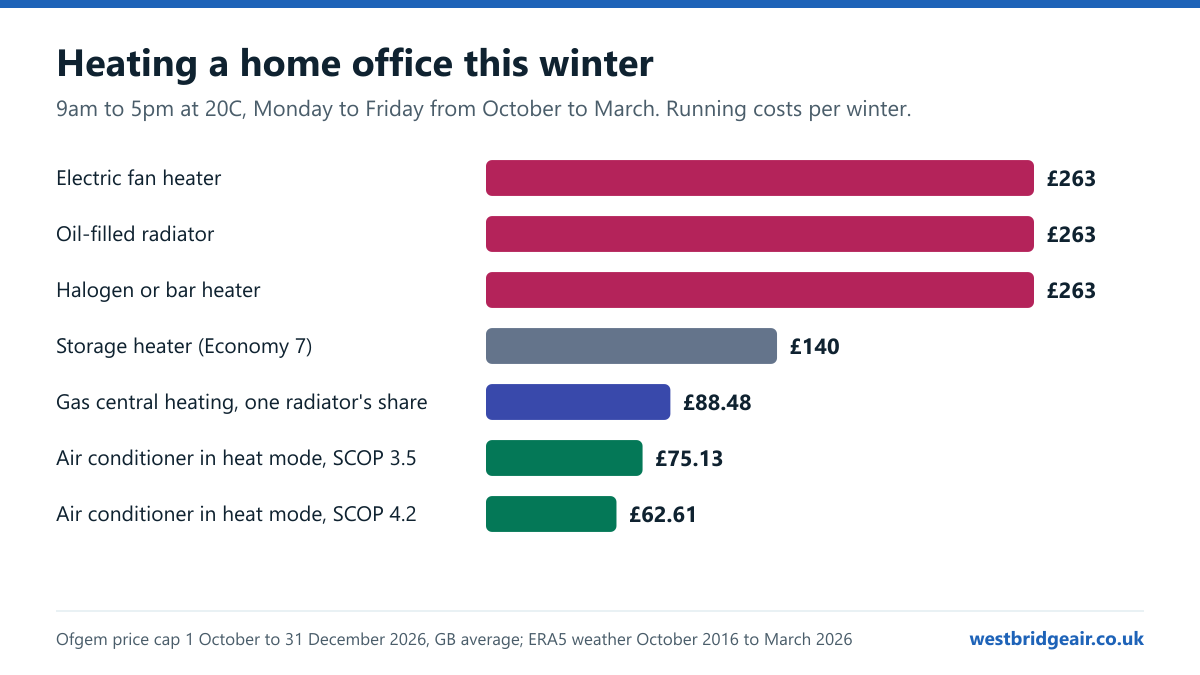
- Working from home? A fan heater in a home office costs about £263 by the end of March, or £2.02 a day. An air conditioner costs about £75.
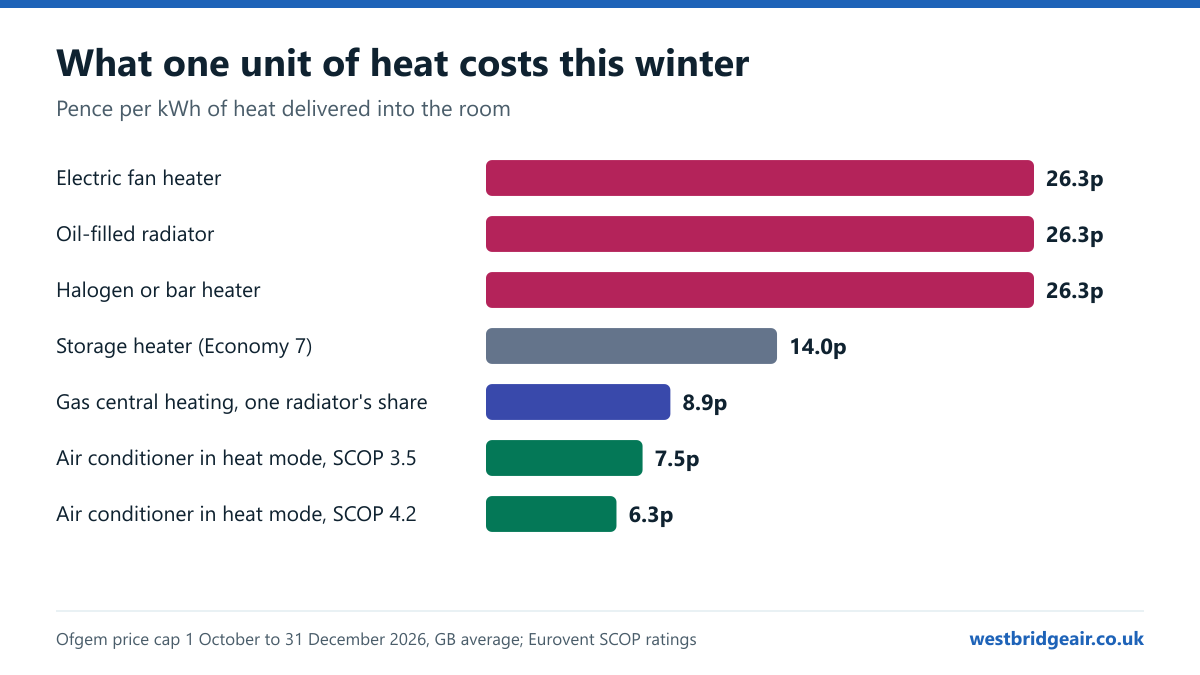
- Oil-filled radiators, halogen heaters and fan heaters all cost the same 26.32p for each unit of heat: none is cheaper to run than another for the same warmth. An oil-filled radiator only feels gentler because it holds and releases heat slowly.
- Per unit of heat, an air conditioner (7.5p on our cautious figure) is now cheaper than a gas radiator (8.9p) at the current cap.
- Turning on the whole central heating system to warm one room every evening could cost around £654 a winter, against £95 for that room's own share. It's a rough guide, scaled from the average home's floor area.
- On an Economy 7 meter, a fan heater used in the day costs more, not less: Octopus's Economy 7 day rate in London is 33.11p per kWh, against 26.60p on a single-rate meter.
Compare heaters for your room
Choose when you heat the room and where you live. The bars are drawn to scale; the table has every figure.
5pm to 10pm at 21C, every day from October to March
- Electric fan heater · All its electricity becomes heat£284
- Oil-filled radiator · Same cost per unit of heat as a fan heater£284
- Halogen or bar heater · Same per unit of heat; warms people more than the room£284
- Storage heater (Economy 7) · Best case: charged at the night rate, every bit of heat used£151
- Gas central heating, one radiator's share · Boiler at 90%£95
- Gas central heating, whole home on · Rough guide: an average 96 m² home heated for the same hours£654
- Air conditioner in heat mode, SCOP 3.5 · Our cautious real-world figure£81
- Air conditioner in heat mode, SCOP 4.2 · Certified rating of an entry-level 2.5 kW unit£68
| Method | Per kWh of heat | Per hour | Per evening | Per week | Per winter |
|---|---|---|---|---|---|
| Electric fan heater | 26.3p | 31p | £1.56 | £11 | £284 |
| Oil-filled radiator | 26.3p | 31p | £1.56 | £11 | £284 |
| Halogen or bar heater | 26.3p | 31p | £1.56 | £11 | £284 |
| Storage heater (Economy 7) | 14.0p | 17p | 83p | £5.79 | £151 |
| Gas central heating, one radiator's share | 8.9p | 10p | 52p | £3.67 | £95 |
| Gas central heating, whole home on | 60.7p | 72p | £3.59 | £25 | £654 |
| Air conditioner in heat mode, SCOP 3.5 | 7.5p | 9p | 45p | £3.12 | £81 |
| Air conditioner in heat mode, SCOP 4.2 | 6.3p | 7p | 37p | £2.60 | £68 |
Prices differ slightly by region. A plug-in heater in a bedroom overnight costs most in Eastern England (£455) and least in London (£439) of the areas we cover, as colder nights and the local cap both count.
Why the air conditioner wins, and what it can't do
A plug-in heater turns one unit of electricity into one unit of heat. A heat pump air conditioner moves heat in from the outside air, even on a cold day, so the same unit of electricity brings in several units of heat. That's the whole difference.
It only makes sense if you already have one, or were planning one for summer: fitting a unit costs far more than any plug-in heater, and it heats only the room it's in. Gas central heating still makes sense for a whole house. For a cheap, short warm-up, a heated throw or an extra layer costs less than heating the room at all.
How we worked it out
Prices: the Ofgem price cap for 1 October to 31 December 2026, paying by Direct Debit: 26.32p per kWh for electricity and 7.97p for gas on average across Great Britain, with each region's own rates for the local figures. Ofgem sets no separate Economy 7 night rate, so storage heaters use Octopus Energy's Flexible Economy 7 night rate, a tariff that follows the cap.
The room: a 14 square metre room (about 4 m by 3.5 m) that a 2 kW heater keeps at 21C on a -2C day. Its heat loss is 87 watts for every degree between inside and outside. We worked out the heat it needs hour by hour from real outdoor temperatures for every winter from October 2016 to March 2026 (ERA5 reanalysis), and averaged them. On the coldest hours the heater runs flat out at 2 kW.
Scenarios: living room, every evening, 5pm to 10pm at 21C, every day from October to March; bedroom, overnight, 10pm to 7am at 18C, every night from October to March; home office, working day, 9am to 5pm at 20C, Monday to Friday from October to March. A week is a 26th of the season.
Heaters: every plug-in heater turns all its electricity into heat. A gas boiler is taken as 90% efficient. The air conditioner is a 2.5 kW wall-mounted split unit: the certified seasonal efficiency (SCOP) of an entry-level unit is 4.2, premium units are certified at 5.2, and we lead with 3.5 to allow for real homes falling short of lab ratings. Storage heaters are shown at their best: charged overnight with every bit of heat used when it's wanted.
Whole-home gas: a rough guide that scales the room's cost by floor area, from 14 m² to the average home's 96 m² (English Housing Survey). Real homes vary a lot.
Left out: standing charges (you pay the electricity one whatever heats your home), warm-up time, heat from people, lights and appliances, and the cost of buying or fitting anything. The figures compare running costs only.
- Ofgem: energy price cap unit rates and standing charges by region
- Octopus Energy: public tariff API (Flexible Octopus Economy 7)
- Open-Meteo: historical weather API (ERA5 reanalysis, Copernicus)
- Eurovent: Daikin RXF25F / FTXF25F, SCOP 4.20
- Eurovent: Daikin RXM25A / FTXM25A, SCOP 5.20
- Eurovent: Mitsubishi Electric MSZ-LN25VG2, SCOP 5.20
- English Housing Survey 2024 to 2025: average floor area
Download the data and charts
Every scenario, method and region (CSV). The charts below are 1200 pixels wide and free to reuse.
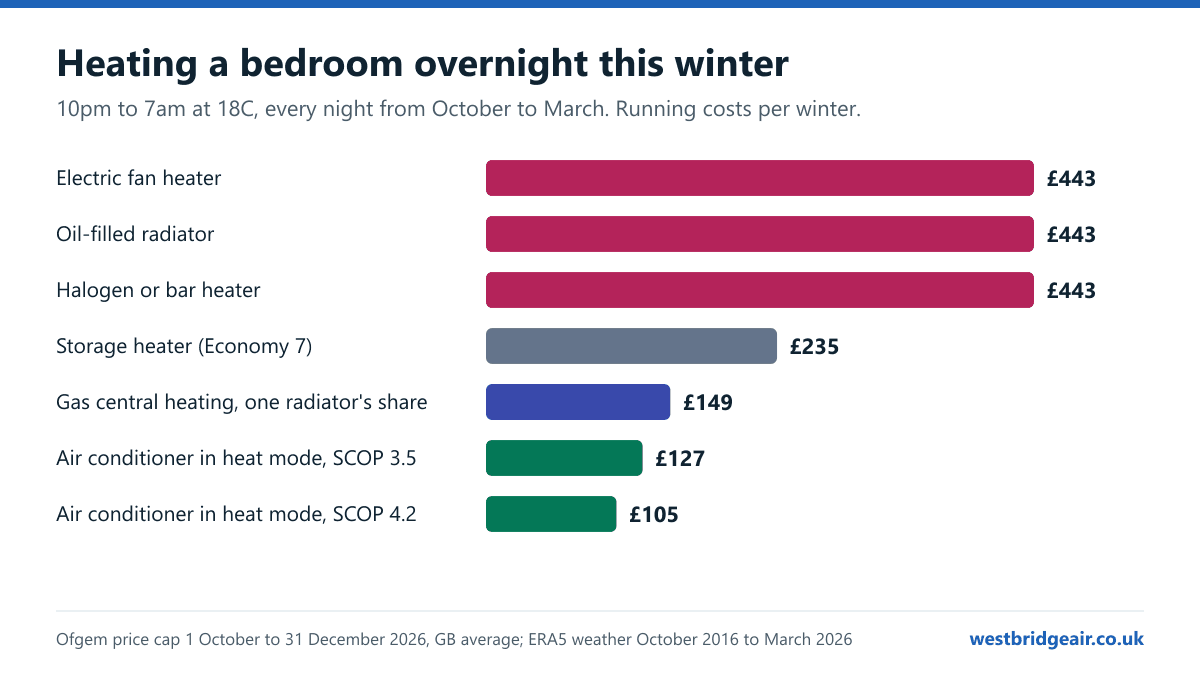 Bedroom overnight, cost per winter (PNG)
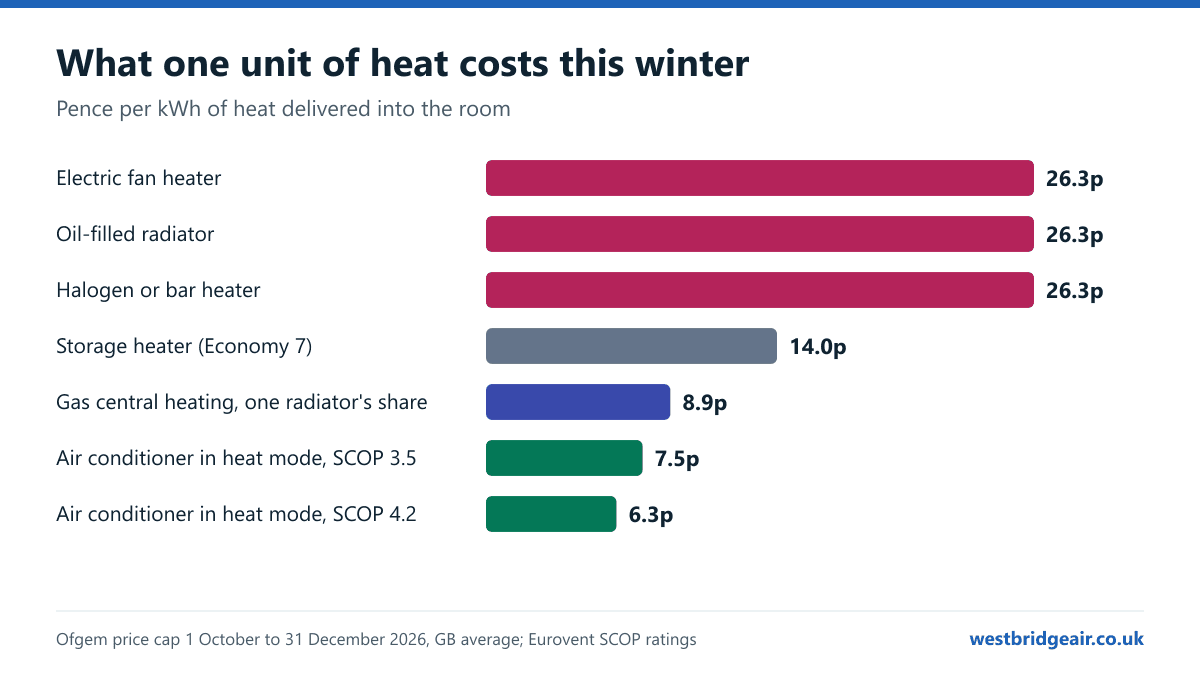 Cost of one unit of heat, by method (PNG)
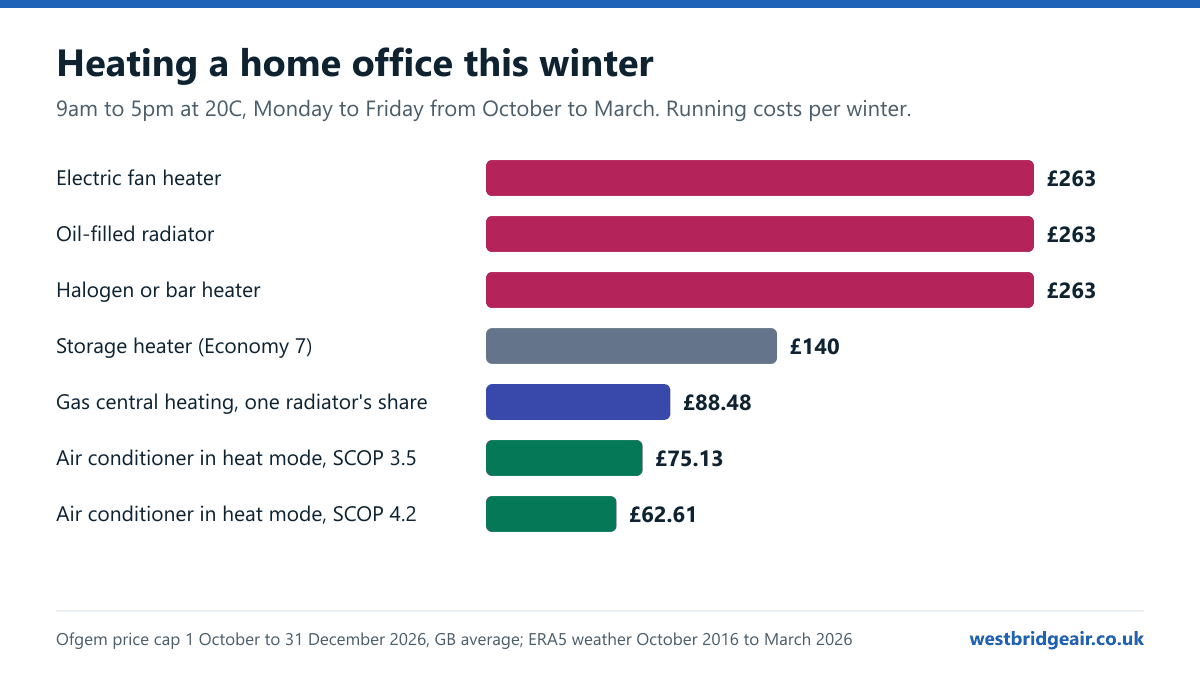 Home office, cost per winter (PNG)
If you use these figures or charts, please credit Westbridge Air and link to this page. Data released under CC BY 4.0. Journalists: email info@westbridgeair.co.uk or call 020 3411 1239 for local figures or a comment.
Already have air conditioning?
Switch it to heat mode (the sun symbol) before you reach for a plug-in heater. If you're thinking about one for summer, we fit and service units that heat too, across London and the Home Counties. See our guide to the cheapest way to heat a room.
Heating cost questions
What is the cheapest way to heat one room?
Of the methods compared, a heat pump air conditioner in heat mode, at 7.5p to 6.3p per unit of heat at the current cap. A gas radiator's share costs 8.9p, and any plug-in heater 26.3p. If you only need to warm yourself for a short while, a heated throw or warmer clothes cost less than heating the room at all.
Is an oil-filled radiator cheaper to run than a fan heater?
No. Both turn every unit of electricity into one unit of heat, so the same warmth costs the same. The oil-filled radiator warms up and cools down more slowly, which some people find more comfortable, and a thermostat on either one saves the most.
How much does a 2 kW heater cost per hour?
Running flat out, 53p an hour at the average cap. Most of the time a thermostat cycles it on and off, so our scenarios average less than that.
Does every air conditioner heat?
Nearly every split system sold for UK homes is a heat pump that heats as well as cools: the remote has a heat mode, usually a sun symbol. Most portable air conditioners only cool. The datasheet lists a heating capacity and a SCOP if it heats.
Will these figures change in January?
Yes. Ofgem announces the January to March 2027 cap in late November, and we'll update this page then. The comparison between heaters barely moves, because it depends mostly on efficiency.