Is air conditioning bad for you?
No, not when the system is clean, well maintained and set sensibly. The problems people blame on air conditioning come from dry air, cold air blown straight at them, very low settings and dirty filters or coils. Here is what the NHS, HSE, UKHSA and Asthma + Lung UK actually say, and the simple habits that avoid each problem.
- home in hot weather, Asthma + Lung UK
- 18 to 26°C
- ideal bedroom, The Sleep Charity
- 16 to 18°C
- comfortable humidity, Daikin
- 30 to 50%
- service keeps the inside clean
- Yearly
On this page9 sections
Air conditioning and dry eyes
When air passes over the cold coil, moisture condenses and drains away, so the room ends up drier as well as cooler. Daikin puts a comfortable indoor humidity at 30 to 50%.
The NHS lists spending time in air conditioned or heated rooms as a cause of dry eyes, and suggests not spending too long in them. A pharmacist can suggest eye drops or gels. See an optician or GP if your eyes are still dry after a few weeks of home treatment.
Air conditioning sore throat and headache
The NHS says most sore throats are caused by viruses or smoking, and doesn't list air conditioning as a cause. If your throat feels dry after a night with the unit on, keep cold air off your face and raise the set point. See a pharmacist, or a GP if it hasn't improved after a week.
For headaches, the NHS names dehydration among the common causes. In hot weather, keep drinking even in a cool room.
Air conditioning and asthma
Asthma + Lung UK says cold, dry air can irritate your airways and make wheezing, coughing and breathlessness worse, even indoors. Its hot weather advice also says hot, humid air can affect breathing, and suggests keeping your home between 18°C and 26°C and staying in the coolest part of it, especially for sleep.
So aim for comfortably cool, not cold, with the airflow off your face. Keep taking your medicines as prescribed and speak to your GP or asthma nurse if your symptoms change.
Air conditioning mould, allergies and hay fever
A clean system doesn't make mould. A neglected one can: dust that gets past dirty filters sticks to the damp coil, fan and drain tray, and that's where musty smells start.
- Smells: see air conditioning smells.
- Mould and health: UKHSA says damp and mould mainly affect the airways and lungs, and can worsen allergic conditions such as rhinitis.
- People who have asthma or allergies, children and older people are more at risk.
- Hay fever: the NHS advises keeping windows and doors shut as much as possible. Cooling makes that bearable on hot days, with clean filters.
The health benefit: staying cool in a heatwave
UKHSA says hot weather can raise the risk of heart attack, stroke and lung problems, and that older people, babies and young children are more likely to be unwell. To cool down, it suggests moving to a cooler place such as a room with air conditioning. See who is most at risk in a heatwave.
Sleep matters too. The Sleep Charity says bedrooms should ideally be around 16 to 18°C and that hot weather can wreak havoc with sleep. See too hot to sleep for what helps.
How to use air conditioning healthily
Aim the louvres away
Point the airflow at the ceiling or an empty part of the room, never at a bed, sofa or desk.
Don't set it very low
Comfortably cool beats cold. Asthma + Lung UK's 18 to 26°C range is a sensible guide for the home.
Use dry mode on muggy days
Daikin says dry mode is designed to reduce humidity, which suits close, humid days.
Keep the filters clean
Clean them as often as your manual asks, more often in heavy use. Our filter cleaning guide shows how.
Book a yearly service
A service cleans the coil, fan and drain you can't reach. See what a service includes and how often to service.
Keep it clean with a service
Our service cleans the filters, the indoor coil, fan and air outlet, and flushes the drain and tray, the parts where musty smells start.
- from£149
An annual service
Keeps the manufacturer warranty valid
Is air conditioning bad for you? Your questions
Is it bad to sleep with the air conditioning on?
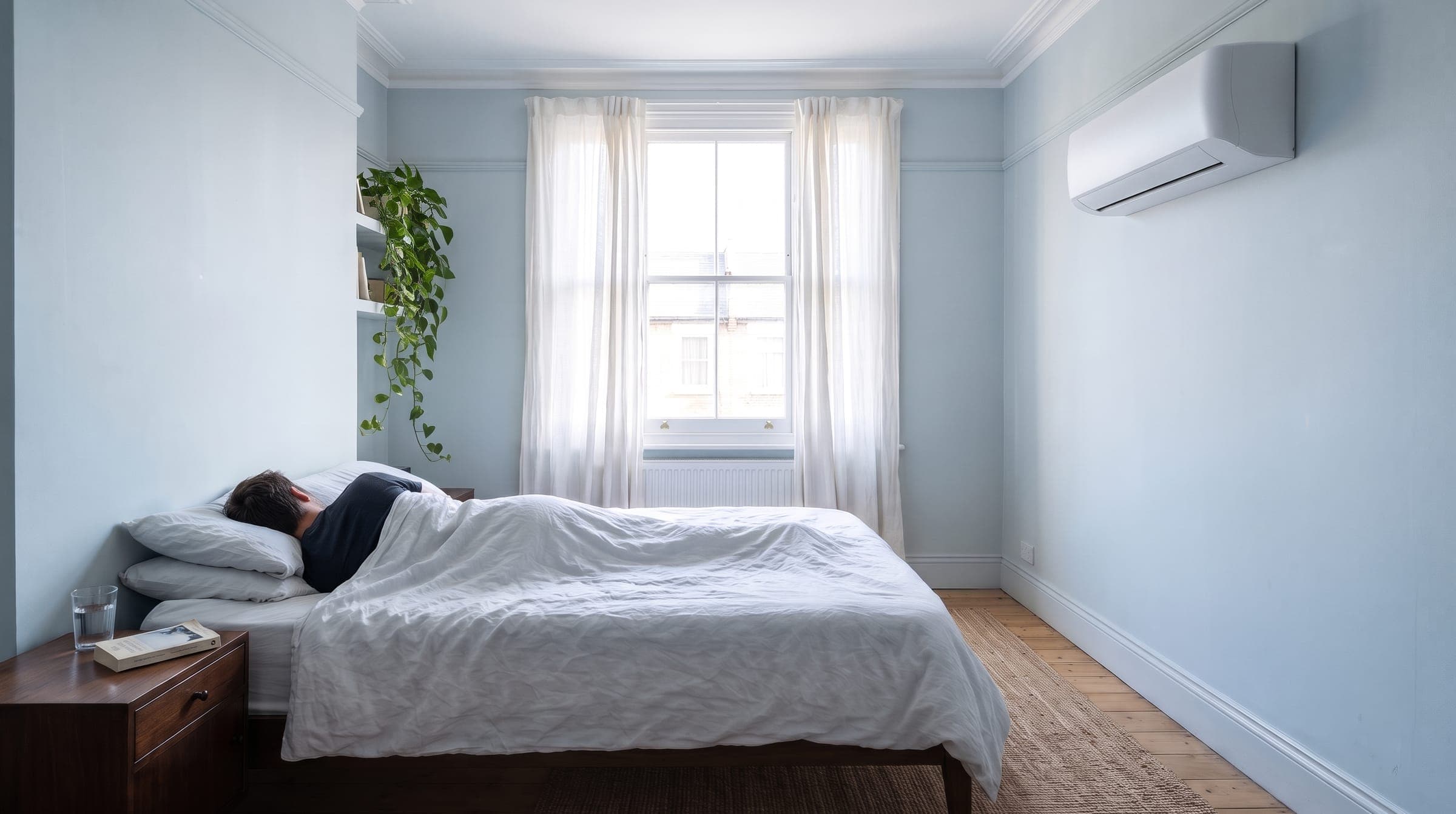
Not if the unit is clean and the air isn't blowing on you. Set it cool, not cold; The Sleep Charity suggests around 16 to 18°C for a bedroom.
Can air conditioning give you a sore throat?
The NHS says most sore throats come from viruses or smoking. If yours feels dry after a night with the unit on, aim the louvres away and raise the set point. See a pharmacist, or a GP if it hasn't improved after a week.
Is air conditioning bad for asthma?
Asthma + Lung UK says cold, dry air can irritate the airways, and hot, humid air can affect breathing too. Keep the room between 18°C and 26°C with the airflow off your face, and speak to your GP or asthma nurse about your own triggers.
Can air conditioning cause mould?
A clean, serviced unit shouldn't. Dirty filters let dust build up on the damp coil and drain tray, which causes musty smells. Clean the filters and book a yearly service.
Can you catch legionella from a home air conditioner?
Home split air conditioning isn't on HSE's list of legionella risk systems, and the water from the coil drains away rather than being stored.
Sources
12
- NHS, Dry eyes
- NHS, Sore throat
- NHS, Headaches
- NHS, Hay fever
- Asthma + Lung UK, Hot weather and your lungs
- Asthma + Lung UK, Cold weather and your lungs
- HSE, What is Legionnaires' disease
- UKHSA, Health risks of damp and mould in the home
- UKHSA, Beat the heat: staying safe in hot weather
- The Sleep Charity, Too hot in bed?
- Daikin, Dehumidification in home air conditioning
- Daikin, Dry mode explained