Air conditioning not cooling? What to check first
Most cooling problems start with something simple: the wrong mode, a clogged filter or a blocked outdoor unit. Here are the checks you can safely do yourself, the signs that point to a real fault, and the parts only an F-Gas certified engineer should touch.
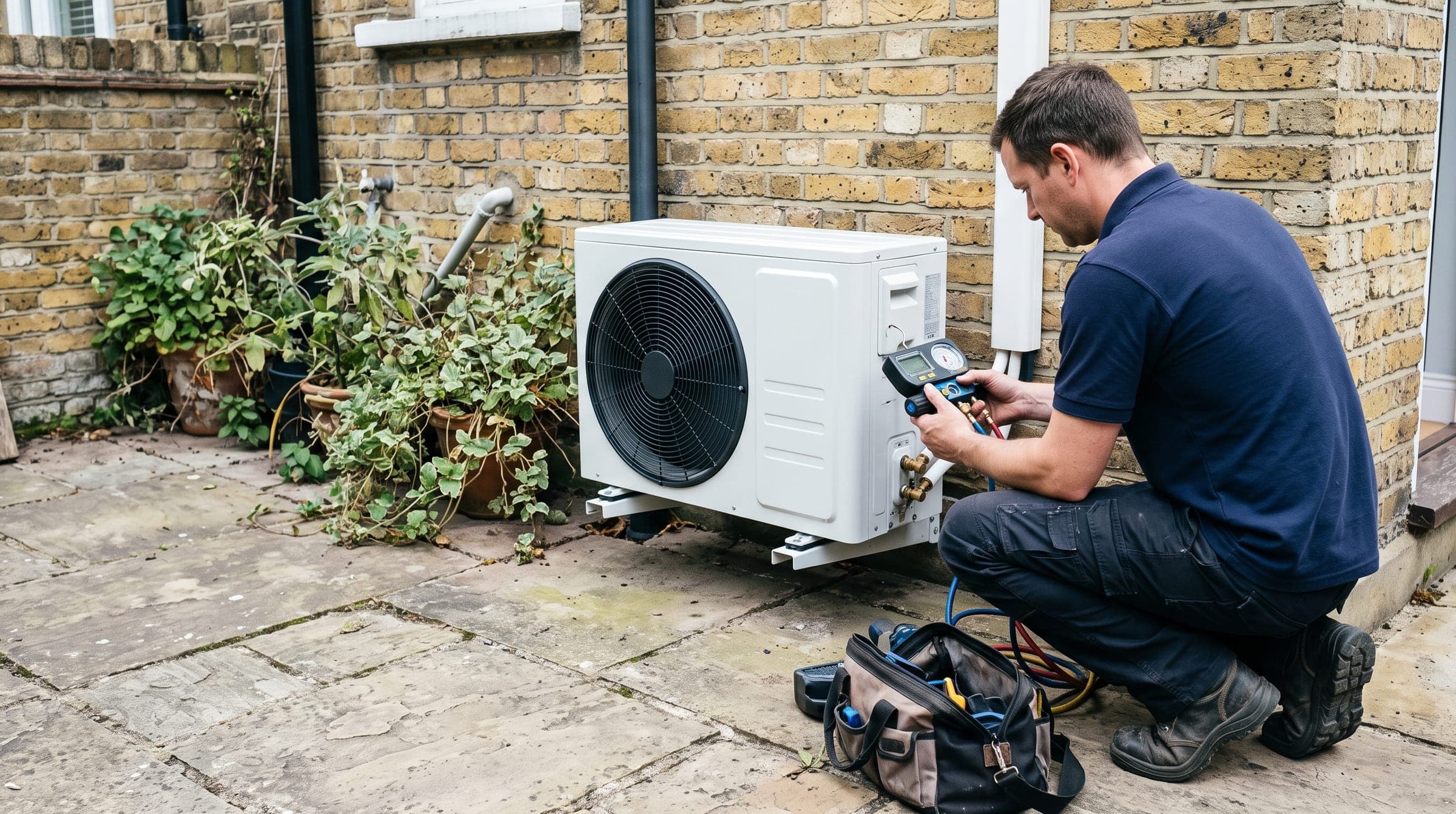
- diagnostic visit, deducted
- £125
- filter clean, Daikin and Panasonic
- Every 2 weeks
- certified engineers
- F-Gas
- including ones we didn't fit
- Any brand
First, is it really a fault?
Modern inverter units don't blast cold air all the time. As the room nears the set temperature, the outdoor unit slows down or pauses and the indoor fan may drop to a lower speed. Panasonic's manual lists this as normal, along with a delay of a few minutes after you restart the unit, which protects the compressor.
Fan speed matters too. On the lowest or quiet setting the unit runs softly and cools less. Turn the fan up and give it 15 minutes before you judge it.
A simple test: after 15 minutes of cooling, hold a kitchen thermometer at the air intake on top of the indoor unit, then at the louvre. Panasonic's manual says a difference of about 8°C is normal. Much less, with the outdoor unit running, points to a problem.
Safe checks you can do yourself
Work through these in order. They fix a good share of call-outs.
- Check the mode is Cool (usually a snowflake), not Fan, Dry, Auto or Heat
- Set the temperature a few degrees below the room temperature, not just below it
- Turn the fan speed up from quiet or the lowest setting
- Check no timer is set to switch the unit off
- Fit new remote batteries. On some Mitsubishi Electric remotes you then press the small reset button with a pen tip
- Rule out the remote: Daikin and Panasonic wall units, among others, have a small on/off button on the indoor unit
- Check the breaker in your consumer unit and the fused spur or isolator near the unit. Reset it once only
- Switch off and isolate, then clean the filters: vacuum or rinse in lukewarm water, dry in the shade and refit
- Close windows and doors, and draw blinds on sunny windows
- Clear leaves, bins, plants and covers from around the outdoor unit so air can flow in and out
Symptoms and what they usually mean
| What you notice | Likely cause | What to do |
|---|---|---|
| Fan blows but the air isn't cold | Wrong mode, set temperature too high, or the outdoor unit isn't running | Check the settings. If the outdoor unit stays silent, book a visit |
| Cold air but weak airflow | Clogged filters or a dirty indoor coil | Clean the filters. Coil cleaning is an engineer's job |
| Ice on the pipes or the indoor coil | Poor airflow over the coil, or low refrigerant from a leak | Switch off, let it thaw, clean the filters. If ice returns, book |
| Unit stops and a light flashes or a code shows | The unit has detected a fault and stopped | Note the code and see our error code guide |
| Breaker or fuse trips | Electrical fault in the unit or the circuit | Leave it off after one reset and book a visit |
| Fine most days but can't keep up in a heatwave | Strong sun on the room, or a unit too small for the space | Close blinds in the afternoon. We can check the sizing |
What not to do
Some well-meant fixes cause expensive damage or put you at risk. Daikin's manual is clear that owners should never clean the inside parts of the unit: that's work for a qualified service engineer.
- Don't take off covers or panels beyond the front panel that gives access to the filters
- Don't touch the aluminium fins. They're sharp and bend easily
- Don't hose, jet wash or spray cleaning products into the indoor or outdoor unit
- Don't keep resetting a breaker that trips. Leave it off and book a visit
- Don't operate the unit or its switches with wet hands
Low refrigerant: why a top-up isn't the fix
Refrigerant isn't used up. It goes round the same sealed circuit for the life of the system, so if the charge is low there's a leak. Some units detect this themselves: Daikin lists U0 as shortage of refrigerant, and LG lists CH38 as low refrigerant.
A proper repair means finding and fixing the leak, pressure testing, pulling a vacuum, then recharging to the correct weight. Topping up without fixing the leak only buys time. The price depends on where the leak is, so we quote it after diagnosis.
What a diagnostic visit costs
If the checks above haven't helped, book a visit. It covers the first hour on site, and we take it off the bill if you go ahead with the repair.
- from£125inc. VAT
Repair diagnostic visit
First hour on site, deducted if you go ahead
When to book a repair
Use the repair form, call or send a WhatsApp with the brand, model, any error code and what you've checked. You get a written price before any work starts.
- You've done the checks and it still isn't cooling
- The outdoor unit doesn't start, or makes a new noise
- Ice keeps forming on the pipes or the coil
- A breaker trips, or there's a burning smell: switch off and leave it off
- Water drips from the indoor unit
- The unit shows an error code or a flashing light
Not cooling questions
Why is my air conditioner running but not cooling?
The usual causes are the wrong mode, a set temperature that's too high, clogged filters or an outdoor unit that isn't running. Check those first. If the indoor fan runs but the outdoor unit stays silent, or there's ice on the pipes, there's likely a fault that needs an engineer.
Why is my air con blowing warm air?
Check it isn't on Heat, Fan or Auto. If it's on Cool and still blowing warm air, the outdoor unit may not be running, which can be a power, control board or compressor fault, or the system may have lost refrigerant through a leak.
Can a dirty filter stop air conditioning cooling?
Yes. Daikin's manual says dirty filters cause poor cooling and heating. Badly blocked filters can starve the coil of air until it ices up. Daikin and Panasonic both recommend cleaning the filters about every two weeks when the unit is in regular use.
Does my air conditioning just need regassing?
Only if there's a leak, because a sealed system doesn't use refrigerant up. The leak has to be found and fixed first, then the system is recharged to the correct weight by an F-Gas certified engineer.
Can I top up the refrigerant myself?
No. In the UK, work on air conditioning refrigerant must be done by someone with an F-Gas qualification. Releasing refrigerant is illegal, and R32 is mildly flammable. Book a visit instead.
Why is there ice on my air conditioning pipes?
Ice usually means too little air over the indoor coil, often from dirty filters, or low refrigerant from a leak. Switch the unit off, put a towel down and let it thaw, then clean the filters. If the ice comes back, book a visit.