How to keep your bedroom cool at night in a heatwave
Keep the sun out during the day, then let air in once it's cooler outside than in. Add a fan while the room is below 35°C, swap the duvet for a cotton sheet, and sleep in the coolest room you have. Here's what UK health guidance says, how to keep a baby or an older relative safe, and when air conditioning is worth it.
- ideal bedroom, The Sleep Charity
- 16–18°C
- baby's room, Lullaby Trust
- 16–20°C
- when fans help, UKHSA
- Below 35°C
- at higher risk in heat, UKHSA
- 65 and over
Keep the sun out during the day
A bedroom that bakes all afternoon stays hot long after bedtime. The UK Health Security Agency's Beat the Heat advice is to close blinds and curtains on windows in direct sunlight during the day, and to close external shutters or shades if you have them. Its keep cool at home checklist calls roller blinds and awnings very effective, and notes that plants outside can shade windows, especially south-facing ones.
Outside shading works best because it stops the sun before it reaches the glass. Inside, close the curtains before the sun reaches that window, not once the room is already hot. The NHS gives the same advice: keep windows, curtains and blinds closed during the day and open them at night once it's cooler outside.
- Turn off lights and anything electrical you're not using, as UKHSA suggests
- Check the heating is off, including towel rails and underfloor heating
- Cook at cooler times of day
How to keep a bedroom cool at night: a heatwave routine
Morning
Close the curtains or blinds on any bedroom window the sun will reach. If it's already warmer outside than in, close the windows too.
Afternoon
Keep the bedroom door shut and the room dark. Opening windows while the air outside is hotter only lets more heat in.
Evening
Once the air outside feels cooler than inside, open the windows wide where it's safe. Windows on opposite sides of the home, with the doors between them open, get air moving through. The Sleep Charity suggests opening doors as well as windows to make a cool draught.
Before bed
Have a cool shower or bath, which The Sleep Charity says lowers your core body temperature. Keep a glass of cold water by the bed, and go easy on caffeine, alcohol and big meals late in the evening.
Overnight
Sleep under a cotton sheet in light cotton nightwear. If the bedroom is still too hot, UKHSA's advice is to move to a cooler part of the home to sleep.
Opening windows safely
Night-time airing is the cheapest cooling there is. Keep it safe, especially with children in the house.
- Fit restrictors or locks to upstairs windows, as RoSPA advises, so they open enough for air but not for a child. Choose quick-release ones, so you can still get out in a fire
- Never put a bed, chest of drawers or any furniture a toddler could climb near a window. RoSPA singles out bedrooms
- On a sash window, open the top half: Lambeth Council notes that growing children can push the bottom open
- Don't leave ground-floor windows wide open while you're asleep or out
- Only open up when the air outside is cooler than inside, as UKHSA advises
Fans: where and how
A fan doesn't cool the air. It moves it, which helps sweat evaporate and makes you feel cooler. UKHSA's advice is to use electric fans if the air temperature is below 35°C, and not to aim a fan directly at your body, because that can lead to dehydration.
Point the fan so it moves air around the room or across the bed, rather than straight at you all night. In the evening, a fan near an open window can help draw cooler outside air in. For a baby, the Lullaby Trust says a fan can cool the room, but don't aim it at the baby.
What works and what doesn't
| Idea | Verdict | Why |
|---|---|---|
| Curtains closed on sunny windows in the day | Works | UKHSA and NHS advice: keeps the sun's heat out |
| External blinds, shutters or awnings | Works best | UKHSA calls roller blinds and awnings very effective |
| Windows open in the afternoon heat | Backfires | Lets hotter air in. Open up when it's cooler outside |
| A fan blowing straight at you all night | Avoid | UKHSA says it can lead to dehydration |
| A fan when the room is over 35°C | Won't help | UKHSA advises fans only below 35°C |
| A cool shower before bed | Works | Lowers your core temperature, says The Sleep Charity |
| A cotton sheet instead of a duvet | Works | The Sleep Charity's advice for hot nights |
| Lights, TVs and chargers left on | Avoid | UKHSA: turn off what you're not using |
Top-floor and loft bedrooms
These are usually the hottest rooms in the home, and the official guidance agrees. UKHSA's checklist lists top-floor flats as more likely to overheat because heat rises, along with homes with windows on only one side, large east, west or south-facing windows without shade, and highly insulated homes, which can trap heat.
Shade the windows from outside if you can, and air the room hard overnight. If it still won't come down, sleep on a lower floor during a heatwave. If a loft bedroom is still too hot every summer despite all this, that's when fixed cooling is worth considering.
How to keep a bedroom cool in summer for a baby
The Lullaby Trust recommends a room temperature of 16 to 20°C for babies, as a guide, and suggests a room thermometer where your baby sleeps, because it's hard to judge by feel. To check whether your baby is too hot, feel their chest or the back of their neck, not their hands or feet. If the skin is hot or sweaty, take off a layer of bedding or clothing.
In hot weather, the Lullaby Trust suggests lighter bedding and clothing, opening the bedroom door and a window if it's safe, and keeping the cot out of direct sunlight. Babies don't need hats indoors and shouldn't sleep under a duvet or quilt. Fully breastfed babies may feed more often in the heat, and formula-fed babies can be offered a little cooled boiled water.
UKHSA lists children aged 5 and under among those at higher risk in hot weather. Its advice is to make sure there's enough air flow, remove excess clothing and check on them regularly.
Older people and anyone at higher risk
UKHSA's list of people at higher risk in hot weather includes adults aged 65 and over, people with long-term health conditions, particularly heart and breathing problems, pregnant women, people taking certain medicines and people who live alone. If someone you know is on that list, check in during a heatwave, help them shade and air their home, and make sure their bedroom isn't the hottest room in the house.
When air conditioning makes sense
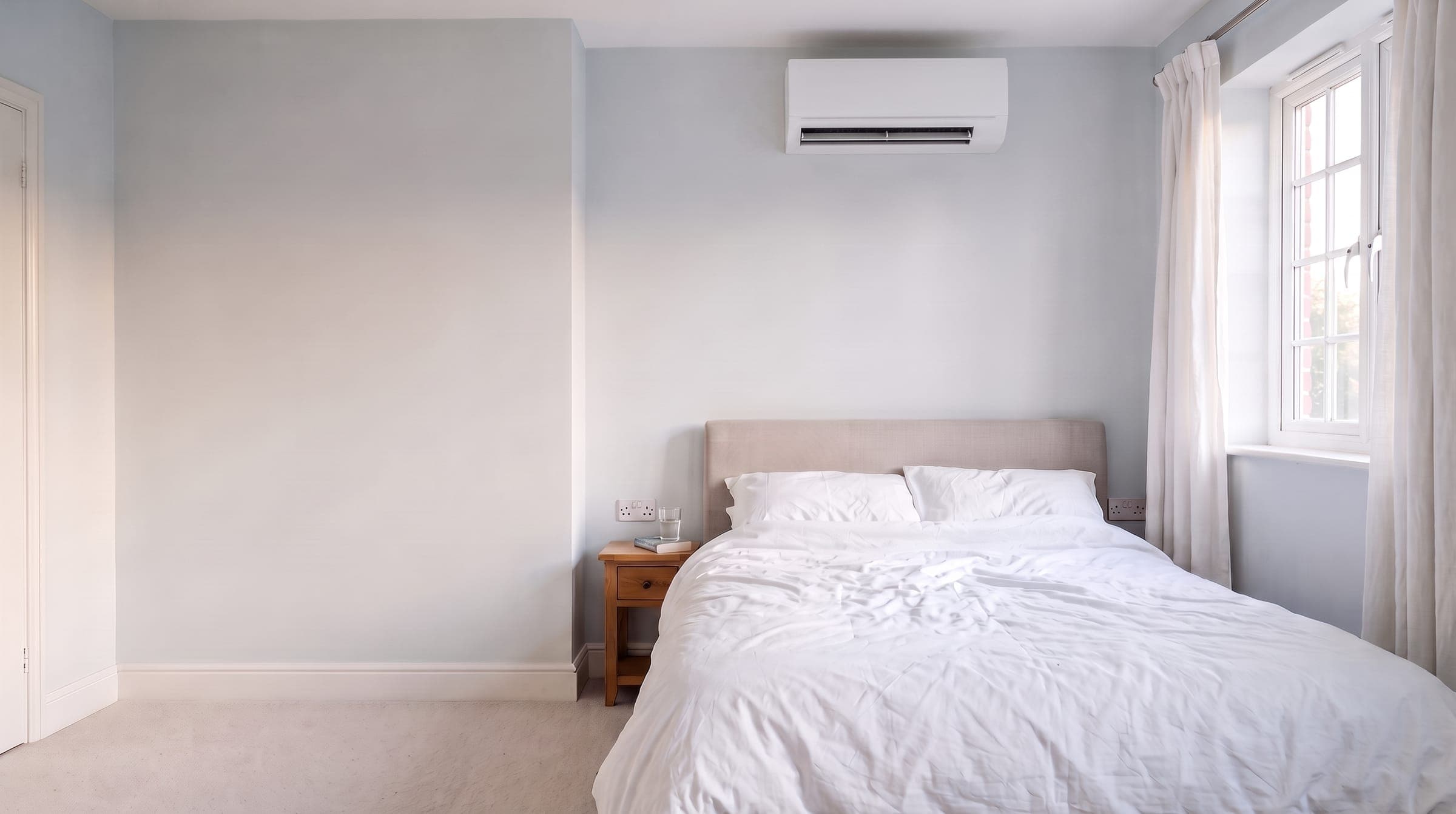
If the bedroom is still too hot to sleep after shading, airing and a fan, or someone at higher risk sleeps there, a fixed system is the reliable answer. It also lets you keep the windows shut on noisy or unsafe nights.
Bedroom units are quieter than most people expect. Premium 2.5 kW wall units from Daikin, Mitsubishi Electric, Panasonic and LG list 19 dB(A) on their quietest setting. Sleep settings ease the temperature up gently through the night, and dry mode takes moisture out of muggy air. The systems we fit heat as well as cool, so the same unit warms the room in winter. That also matters for planning: in England, a unit used only for cooling can't use the permitted development rules.
For a nursery, we place the unit so the air never points at the cot, and a room thermometer helps you keep to the Lullaby Trust's range.
What a bedroom unit costs
A single bedroom unit, fully fitted. Your fixed price comes after a free survey.
- from£1,850inc. VAT
A bedroom or study
2.5 kW wall unit, 5 m pipe, fitted in a day
Bedroom heat questions
What temperature should a bedroom be for sleeping?
The Sleep Charity says bedrooms should ideally be around 16 to 18°C for adults. For babies, the Lullaby Trust recommends 16 to 20°C as a guide. In a heatwave you may not get that low, but every degree you take off helps.
How can I keep my bedroom cool without air conditioning?
Shade the windows during the day, ideally from outside. Open up at night once it's cooler outside than in. Use a fan while the room is below 35°C, sleep under a cotton sheet, have a cool shower before bed, and switch off anything you're not using.
Should I sleep with the window open in a heatwave?
Yes, if it's cooler outside than in and it's safe. UKHSA advises opening windows when the outside air feels cooler. Keep them closed and shaded during the hot part of the day, and fit restrictors to upstairs windows if there are children in the home.
Is it safe to sleep with a fan on?
Yes, used sensibly. UKHSA says fans help when the air is below 35°C, and not to aim one directly at your body because it can lead to dehydration. For a baby, the Lullaby Trust says you can use a fan to cool the room, but not aimed at the baby.
How do I keep my baby's room cool in a heatwave?
Keep the curtains closed during the day, open a window and the door at night if it's safe, use lighter bedding and clothing, and keep the cot out of direct sun. Use a room thermometer and aim for the Lullaby Trust's 16 to 20°C. If you're worried about your baby, call NHS 111.
Why is my bedroom hotter than the rest of the house?
Heat rises, so top-floor and loft rooms get hottest. UKHSA also lists sun-facing windows without shade, windows on only one side and highly insulated homes as reasons a home overheats. A bedroom with any of these needs the most shading and night-time airing.
Is air conditioning in a bedroom worth it?
If the room is too hot to sleep in for weeks each summer, or someone at higher risk sleeps there, usually yes. A correctly sized quiet unit runs at about 19 to 20 dB(A) on its quietest setting, and it heats the room in winter too.